
Last updated November 15, 2026
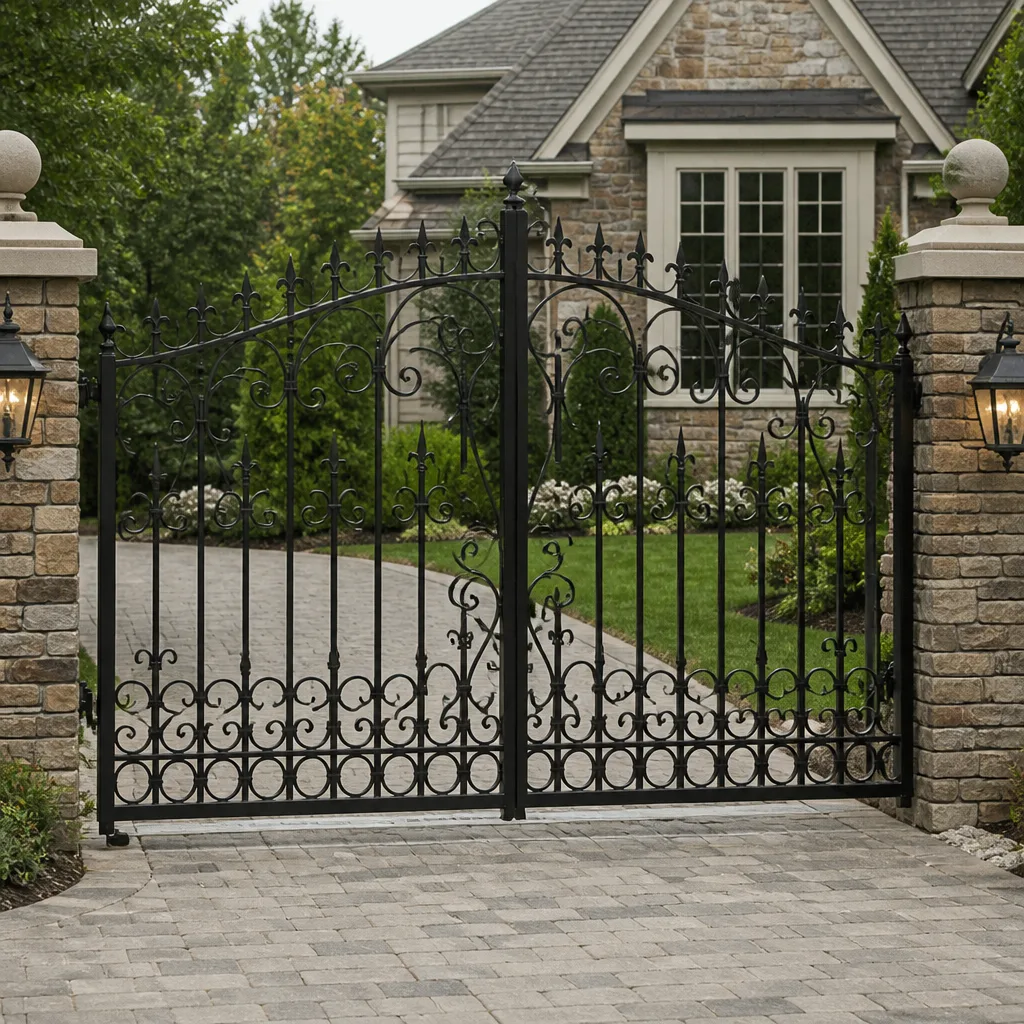 Wrought iron
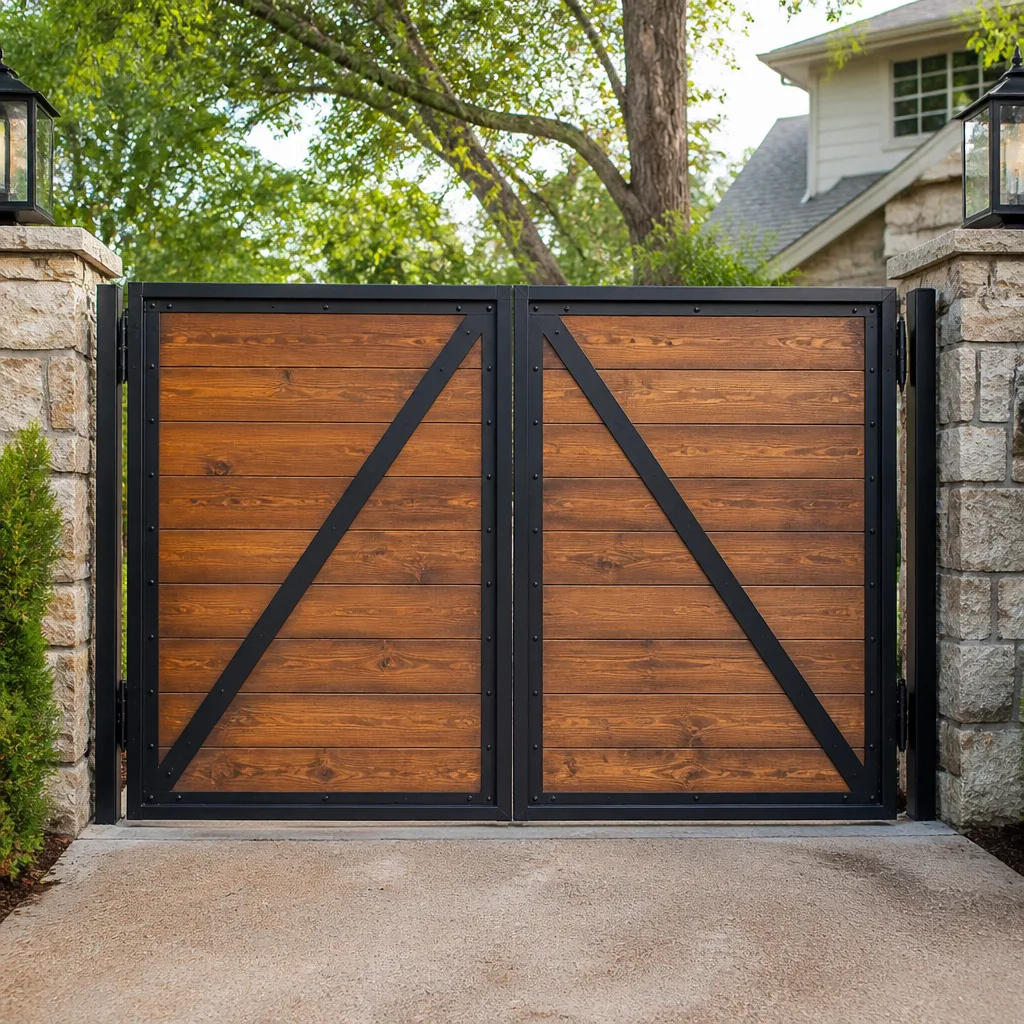 Wood & steel frame
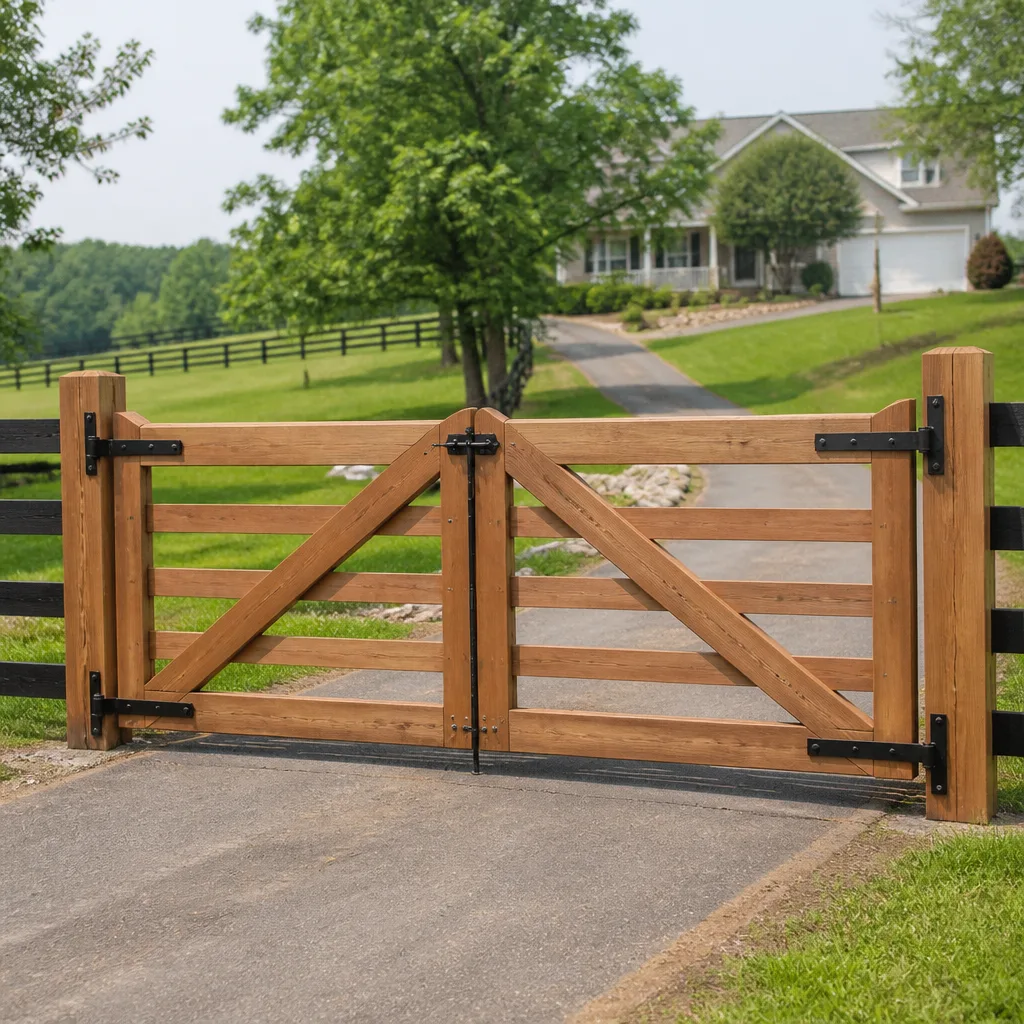 Farm & ranch
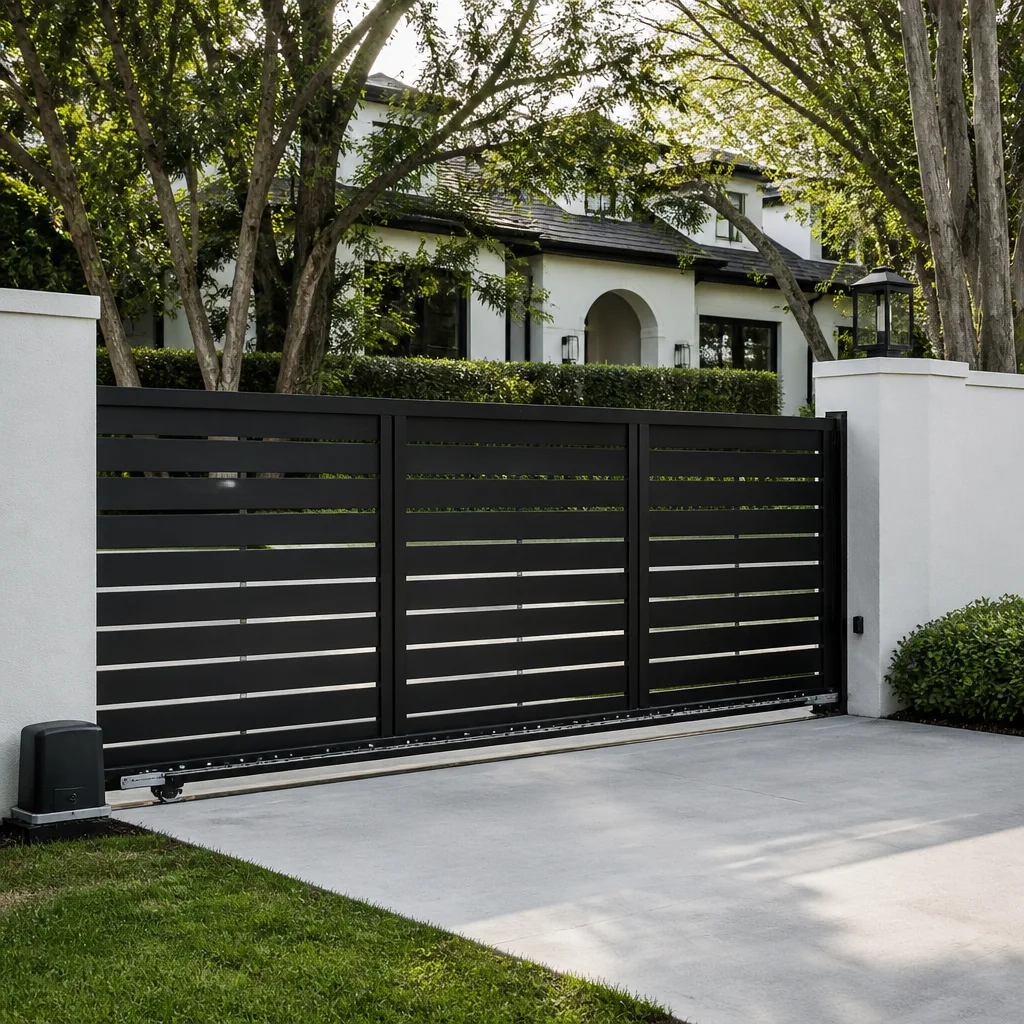 Sliding driveway gates
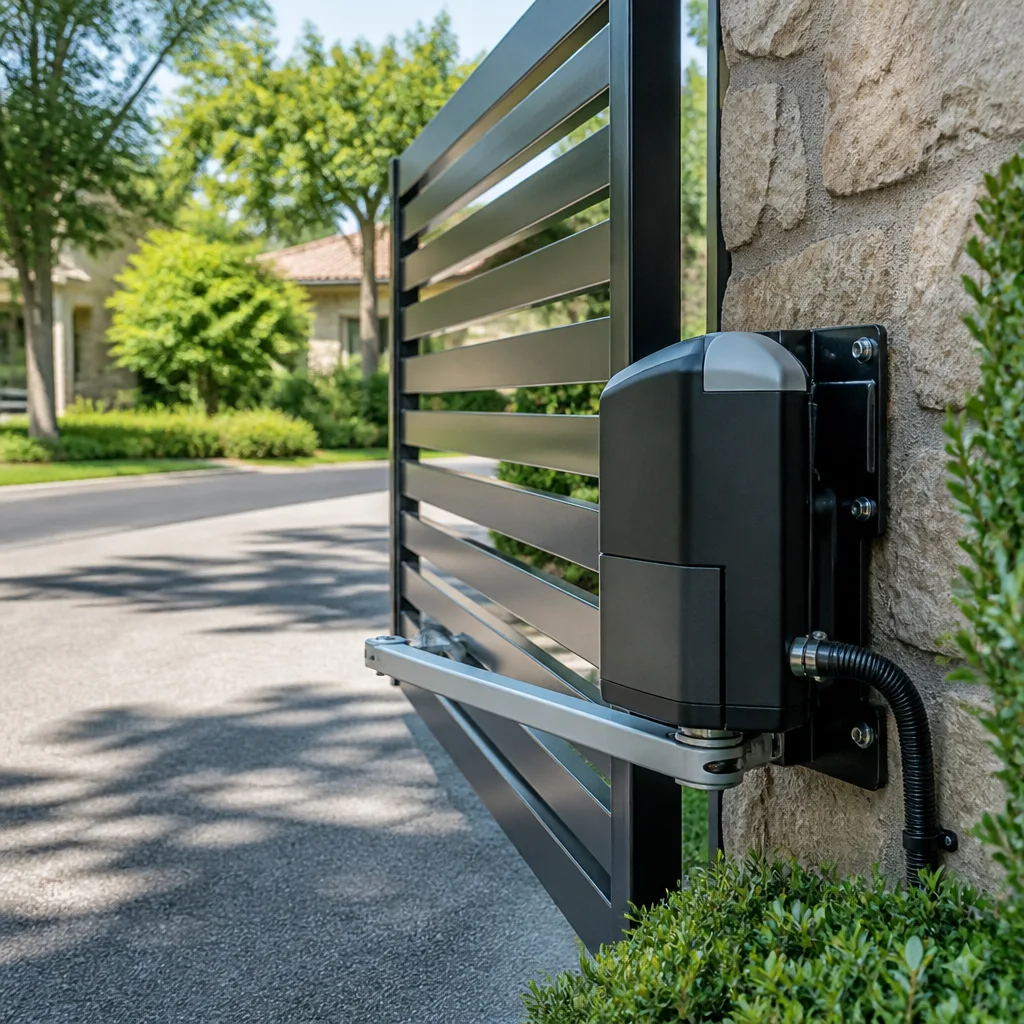 LiftMaster operators
Free on-site gate assessment - hinges, posts, and your LiftMaster or Nice gate operator checked before anything is quoted
The assessment is free and the quote is the invoice.
Get your free estimateThe Complete Guide to Gate Repair in Paterson
A gate that drifts open overnight isn’t a lock problem. It’s almost always a hinge or post-plumb problem, and replacing the lock just masks the failure until the gate won’t close at all. We see this constantly in Paterson: a homeowner tightens a latch three times, replaces a receiver, then finds the post has leaned two inches out of plumb and the gate has been fighting it for a year. Gates fail in predictable ways, and the failure usually starts somewhere other than where the symptom shows up. This guide maps the whole diagnostic chain, from the first sign of trouble to the repair, adjustment, or replacement that actually solves it. You’ll learn to tell structural failures from mechanical ones, understand why Paterson’s older lots stress gates that were built for suburban spec, and know when an operator problem is being misdiagnosed as a gate problem.
Quick Answer
Gate repair in Paterson usually means fixing one of three root causes: foundation or post shift, an operator that’s mismatched to the gate, or hinge and hardware wear that’s been deferred too long. Most repairs fall into diagnosis first, then adjust or replace the specific failed component, and a gate that’s still structurally sound rarely needs full replacement. Getting the diagnosis right the first time is what saves money, because treating a symptom (a latch, a remote, a sensor) while the real cause goes untouched is how small fixes stack into big bills.
Styles & brands we work with
- Wrought iron
- Wood & steel frame
- Farm & ranch
- Sliding driveway gates
- LiftMaster operators
Table of Contents
- The Diagnostic Chain: How to Trace a Gate Problem to Its Root
- Structural vs. Mechanical Failures: How to Tell Them Apart
- Why Paterson’s Older Urban Lots Stress Gates Built for Suburbs
- Part-by-Part: Every Component and Its Typical Failure Mode
- Operator Problems Misdiagnosed as Gate Problems
- Repair, Adjust, or Replace: Making the Economic Call
- What a Gate Repair Visit Actually Involves
- Keeping a Gate Working Between Repairs
The Diagnostic Chain: How to Trace a Gate Problem to Its Root
Every gate problem leaves a trail. The trouble at the top (a latch that won’t catch, a motor that strains) usually has a cause at the bottom (a post that moved, a footing that heaved, a hinge that’s worn oval). Working the chain in order saves you from replacing parts that were never broken.
Here’s how we walk through a diagnosis on a residential gate in Paterson, and the order matters:
- Look at the gate’s resting position. Open it halfway and let go. Does it swing on its own? Does it scrape at one corner? Self-swinging almost always points to a post out of plumb, not a hinge.
- Check the posts for plumb and the footings for movement. A level held against the hinge post tells you more in ten seconds than an hour of testing the latch.
- Inspect the hinges for play and elongation. Lift the gate at the outer edge. Any vertical slop means hinge wear or a hinge plate pulling from the post.
- Examine the frame for racking. A gate that’s dropped on the latch side has a diagonal that’s no longer square. Racking is structural, and no amount of latch adjustment fixes it.
- Test the operator separately from the gate. Disconnect the operator and swing the gate by hand. If it moves freely, the gate is fine and the operator is the suspect. If it binds, the gate is the problem and the operator is just reporting it.
- Check the safety devices and controls. Photo eyes, loop detectors, and limit switches are common culprits behind a gate that “won’t close” when the gate itself is sound.
That last step is where a lot of wrong turns happen. When a gate stops closing, the instinct is to blame the gate. In our experience, once you’ve confirmed the gate swings clean, the fault is nearly always electrical or in the operator’s logic. That’s exactly the kind of call a general repair service passes on, because diagnosing an operator board or a misaligned photo eye is outside what most handymen handle. It’s a core part of what we do, and the same chain of checks applies to any electric gate repair job.
Structural vs. Mechanical Failures: How to Tell Them Apart
Structural failures mean the gate’s mounting or frame has moved. Mechanical failures mean a moving part has worn. The two feel similar (the gate doesn’t work) but the repairs are completely different, and treating one like the other is how homeowners end up paying twice.
Structural signs to look for:
- The gate swings open or closed on its own when released.
- A visible gap between the post base and the concrete, or concrete that’s cracked and lifted around the post.
- The gate drags or scrapes along the ground at one end.
- The top rail is no longer parallel to the ground, or the gate looks “dropped.”
- The latch gap is uneven on the top and bottom, a classic sign of a post leaning.
Mechanical signs to look for:
- Hinges that squeal, bind, or have side-to-side play.
- The latch binds at one point in the swing but clears elsewhere.
- Screws that keep backing out of hinge plates no matter how often they’re tightened.
- A wheel or roller on a slide gate that’s flat-spotted or worn.
Why the distinction matters: a structural problem can’t be fixed with a new latch, and a mechanical problem doesn’t need a new gate. Misreading a leaning post as a bad latch means the latch fails again in weeks. Misreading worn hinges as a structural collapse means you get quoted for work you don’t need. If you’re not sure which you’re looking at, that’s the right moment for a proper on-site estimate, because the cost of guessing wrong on this call is real.
Why Paterson’s Older Urban Lots Stress Gates Built for Suburbs
Paterson’s residential lots are not cookie-cutter suburban plots, and the gates on them pay for it. Many of the city’s older neighborhoods have narrow driveways, tight side yards, irregular grades that change within the same block, and footings poured decades ago against standards that didn’t anticipate today’s heavier gates and operators.
Here’s what that means in practice:
- Narrow driveways leave no margin for error. A gate sized for a standard suburban opening has to be trimmed to fit a Paterson drive, and a shortened gate changes the swing geometry, the operator arm angle, and the load on the hinges. Operators built for a standard opening get mismatched to a shorter one, and the mismatch shows up as premature motor failure.
- Grade changes within a lot stress the operator. A driveway that slopes toward the street means the gate is working against gravity for part of every cycle. Residential operators rated for flat ground run hotter and fail sooner on a slope, which is why operator selection matters more here than on a flat lot.
- Older footings move. Shallow, aging concrete under a hinge post is the single most common structural failure we deal with. Concrete heave and post lean are the top of the diagnostic chain more often than any part failure.
- Tight clearances along property lines leave little room for slide gates, so swing gates dominate, and swing gates concentrate all the load on two posts and a handful of hinges.
None of this is a problem with the gate, exactly. It’s a problem of matching the gate to the lot it’s on. When we look at a gate in the city, we’re looking as much at the ground under it and the space around it as at the gate itself. A gate that’s been right for a suburban spec can be constantly fighting a Paterson lot. Fixing that mismatch is often the whole job.
Part-by-Part: Every Component and Its Typical Failure Mode
Knowing what each part does and how it usually fails turns a mystery into a checklist. Here’s a walk through a residential gate system, top to bottom. We service equipment from LiftMaster, FAAC, BFT, Linear, and other major manufacturers, and while the parts differ across brands, the failure patterns are consistent.
Structural Components
- Posts and footings: Fail by leaning, heaving with frozen or saturated ground, or rotting at the base. This is the root cause behind most “my gate won’t close” calls.
- Frame and diagonal bracing: Fails by racking, where the gate drops out of square and drags. Usually the result of a post that’s moved or a hinge that’s pulled.
- Hinge plates and anchors: Fail by loosening in the wood or masonry, or by the screw holes going oval. Once the holes are enlarged, retightening doesn’t hold.
Mechanical Components
- Hinges: Wear at the pin and the barrel. Play here translates into a sagging gate and a latch that misses.
- Latch and striker: Misalign when the gate settles. A latch that’s been “adjusted” repeatedly is a symptom, not a fix.
- Rollers and tracks (slide gates): Wear flat spots, or the track fills with grit and the gate binds. Debris is the number-one slide gate failure in our area.
- Wheels, guides, and stops: Simple parts that take a beating and are cheap to replace when caught early.
Electrical and Operator Components
- Motor and gearbox: Fails from load mismatch, age, or running against a binding gate.
- Control board: The brain of the operator and a common failure point. Symptoms often mimic gate problems, which is why the board is where a lot of misdiagnosis gets settled.
- Photo eyes and safety sensors: Get knocked out of alignment or fail outright, and the gate refuses to close for “safety.” This is the most common false alarm we see.
- Loop detectors: Buried in the driveway to sense a vehicle. They fail from paving work, water intrusion, or a bad splice in the wiring.
- Intercom and entry wiring: Fails at connections, at the strike, or where wiring runs underground and takes on moisture.
- Keypads, remotes, and receivers: Fail from battery, pairing, or receiver faults, not from the gate.
Notice how much of the list sits somewhere other than the gate’s moving parts. In our experience, the majority of “gate problems” we’re called out on originate above or below the gate frame, not in it.
Operator Problems Misdiagnosed as Gate Problems
This is the single most expensive misdiagnosis in gate repair, and we see it in Paterson regularly. The gate stops closing. A technician assumes the gate is binding and “fixes” the hinges. The gate still won’t close, because the problem was a photo eye knocked out of alignment by a bump, or a control board that lost its programming after a power surge.
The tell is simple: if the gate swings freely by hand when the operator is disconnected, the gate is not the problem. The operator, or the wiring feeding it, is. Here’s what that usually means:
- Safety sensors out of alignment. Photo eyes have to be aimed at each other, and a gate that stops or reverses mid-travel is often reporting a safety trip, not a mechanical bind.
- Control board faults. Boards lose their programming, take surge damage, or fail at a relay. Each brand has its own failure patterns and its own programming sequence, which is why knowing the brand matters. A LiftMaster board and a FAAC board fail differently and are diagnosed differently.
- Limit switch misadjustment. The operator’s travel limits drift, or get bumped, and the gate stops short or reverses. This is an adjustment, not a repair, and it’s the cheapest fix on this list when diagnosed correctly.
- Loop detector or intercom wiring faults. An exit loop that’s failed will keep a commercial gate from opening for a vehicle, and the gate will look “stuck” when it’s actually being told not to open.
Diagnosing this correctly requires the kind of brand-specific knowledge that only comes from working on these operators constantly. Brands like BFT and Linear have distinct quirk points in their control logic and proprietary parts, and an operator problem diagnosed by someone familiar with the brand is a quick visit. The same problem diagnosed by someone unfamiliar is a guessing game that ends with parts swapped for no reason. That’s why electric gate repair is a core service here rather than an afterthought.
Repair, Adjust, or Replace: Making the Economic Call
Once you know the root cause, the decision comes down to three options: adjust, repair, or replace. Each has a clear economic answer when you frame it correctly. Here’s how we think through it.
When to Adjust
If the gate is structurally sound and the fault is alignment or wear within tolerance, adjust. Hinges can be shimmed, latches moved, limit switches reset, photo eyes re-aimed, and walking gates re-plumbed within a fraction of an inch. Adjustments are the least expensive outcome and the right first answer when nothing is broken.
When to Repair
When a specific part has failed but the gate as a whole is sound, repair that part. A worn hinge, a bad latch, a failed control board, a motor that’s beyond its service life, a photo eye, a loop detector: each of these is a discrete repair and worth doing while the frame is healthy. A gate that’s ten years old and sound should usually be repaired, not replaced, even if the repair touches a few components.
When to Replace
Replacement is the right call when the gate’s frame or footings are failing beyond what repair can economically fix, when the operator is so far behind the gate’s requirements that a repair just resets the clock on the mismatch, or when a string of repairs has stacked up past the point where they add up to less than a new gate. Replacing the gate is not the right answer to a single failed component, and we’ll tell you when your gate has more life in it.
The economic frame we use: add up what the repairs cost to keep the gate working over the next few years and compare that to a new installation. If the math is close, replacement wins because the new system starts clean. If the repairs are small and the structure is sound, repair wins every time. We’ve also found that the right question isn’t “repair or replace” but “what is the root cause, and does fixing it require replacing the gate or just the part?” In our experience, the number of gates that genuinely need replacing is far smaller than the number we’re asked to price.
What a Gate Repair Visit Actually Involves
Here’s what you can expect from a proper on-site diagnostic and repair visit, so you know what you’re paying for:
- On-site diagnosis. We walk the chain in order: post plumb, footing condition, frame racking, hinge play, then the operator and controls. This is where the root cause gets separated from the symptom.
- Written estimate before work starts. You get the scope and the price in writing, and the price is agreed before any work begins. No surprise invoice.
- The repair itself. Depending on the diagnosis, that could be re-plumbing a post, shimming or replacing hinges, replacing a latch, swapping a control board, re-aiming a photo eye, or replacing a motor or operator.
- Testing through full cycles. We run the gate through its full travel, check the safety reversals, and confirm the latch and limits are right before we call it done.
- A note on what to watch. If a component is on its way out but not ready to fail, we’ll tell you so you can plan for it instead of being surprised.
If your gate is genuinely beyond repair, we handle installation too, so you’re not starting over with a different contractor. That matters because a replacement job needs the new gate sized to the actual footprint and the operator matched to the new gate, not the other way around. For residential gates in Paterson and for small commercial properties, this full-scope approach is what makes a repair plan practical rather than just a stopgap. Learn more about our broader gate repair work to see how we approach every call.
Keeping a Gate Working Between Repairs
Most of what shortens a gate’s life is load and neglect, and both are manageable. Here’s what we tell owners after a repair, in order of impact:
- Look at the gate’s resting position after any change in weather. A gate that starts self-swinging after a wet season or a freeze is telling you the post has moved. Catching it early turns a repair into an adjustment.
- Keep the hinges clean and moving. A binding hinge turns into a pulled anchor plate, and a pulled anchor plate turns into a re-hang.
- Clear the path of a slide gate. Grit, leaves, and ice are the most common cause of a slide gate that “jams,” and most jammed gates don’t need a repair at all, just a cleared track.
- Watch the safety devices after any bump. A slightly misaligned photo eye stops the gate and gets blamed on the gate. Re-aim it before diagnosing anything else.
- Fix the small stuff before it compounds. Deferred hinge wear is one of the three root causes behind most gate failures, and it’s the cheapest one to catch early.
None of this replaces a proper diagnostic visit once a gate is misbehaving. It just keeps the visits short.
Common Mistakes to Avoid
- Replacing the latch when the post is leaning. A new latch on a leaning post fails again in weeks, because the gate is still swinging out of plumb. Check plumb before you touch the latch.
- Assuming a gate that won’t close is a gate problem. Disconnect the operator and swing the gate by hand. If it moves freely, the gate is fine and you’re chasing an operator or safety-device fault.
- Retightening hinge screws that keep backing out. Screws that won’t hold mean the holes are enlarged or the plate is pulling, and re-driving them makes the hole worse. This needs a proper fix, not a bigger screw.
- Buying a bigger operator to fix a binding gate. A heavier motor masks the bind for a while, then adds more stress to an already struggling gate. Fix the gate first, then match the operator to it.
- Ignoring a gate that scrapes the ground. Scraping is the sound of a footing or frame problem getting worse, and the longer it drags, the more of the frame it wears.
- Treating a brand-specific operator fault as generic. A LiftMaster control board, a FAAC board, and a BFT board fail in different ways and need brand-specific diagnosis. Generic troubleshooting guesses.
- Skipping the safety check after a repair. A gate that isn’t verified for proper safety reversal is not fully repaired, and the testing step is what catches it.
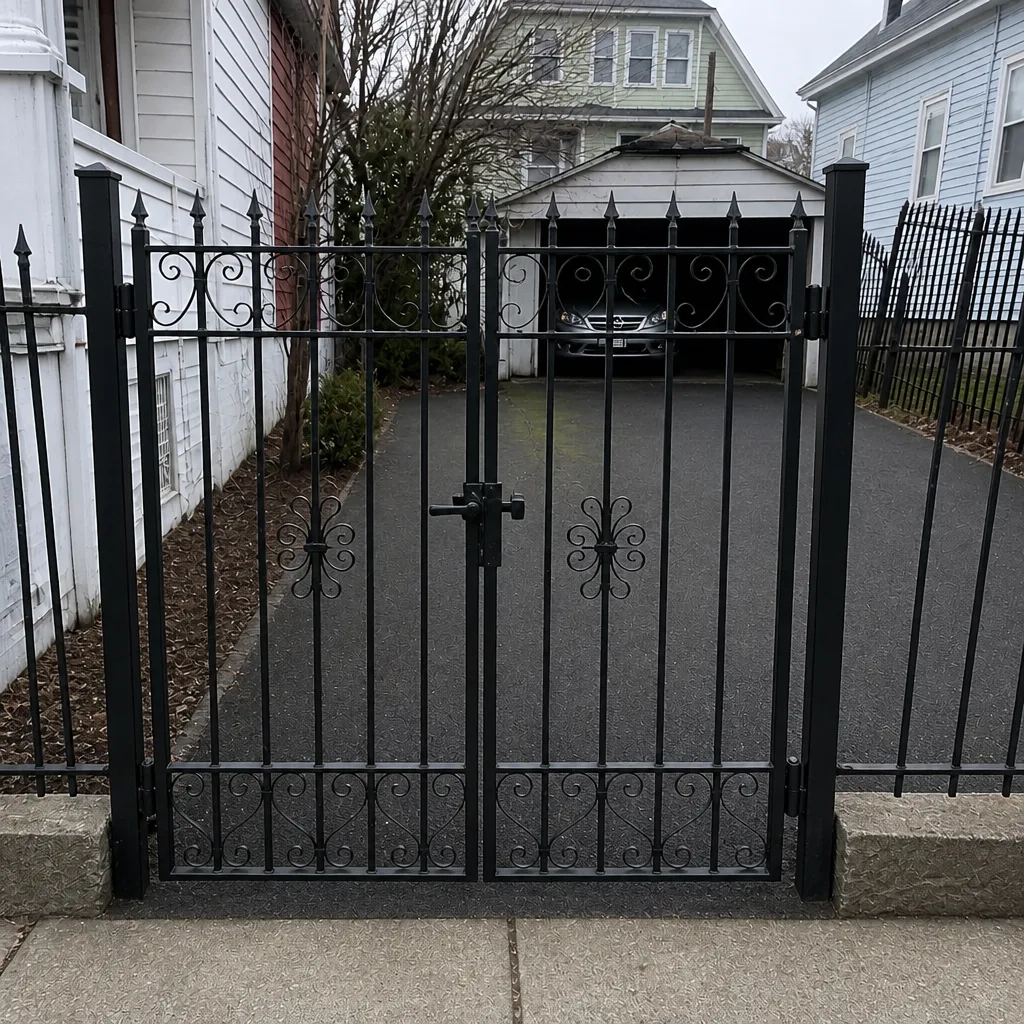
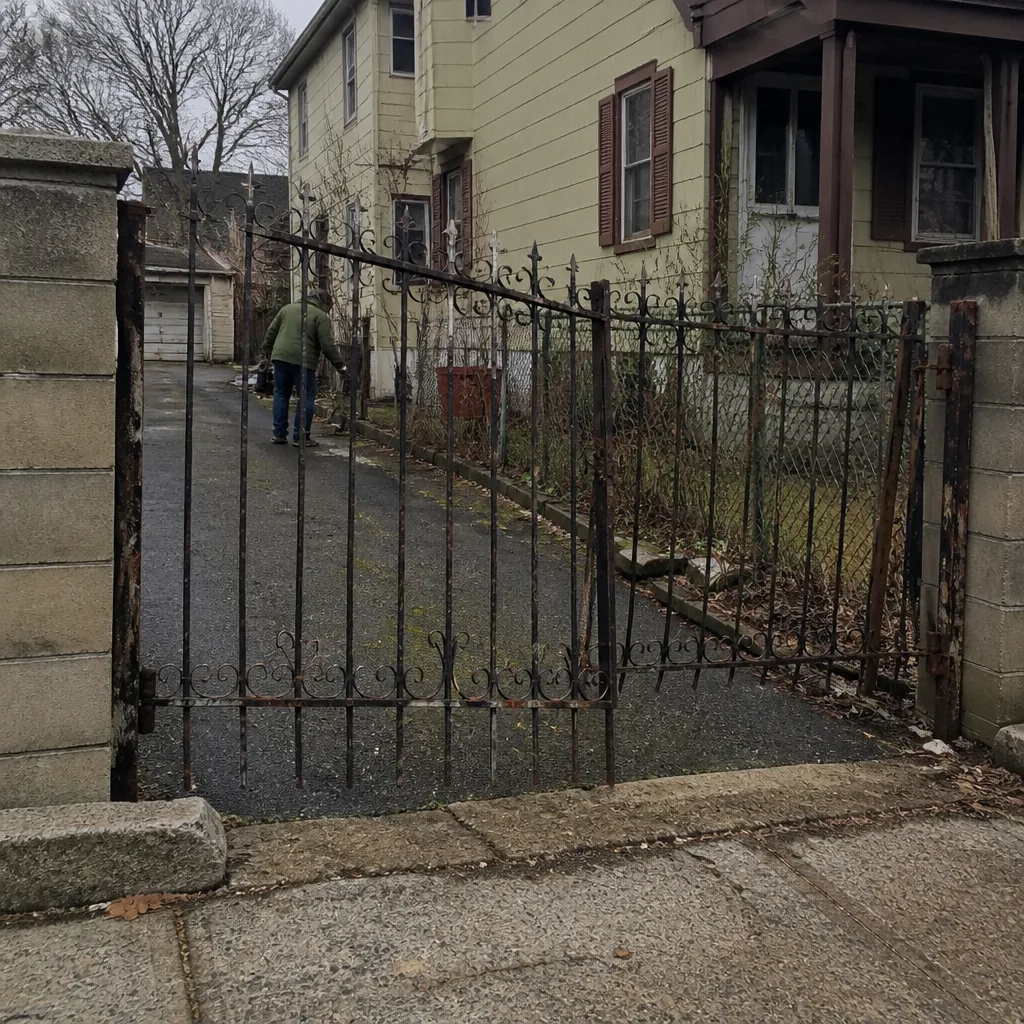
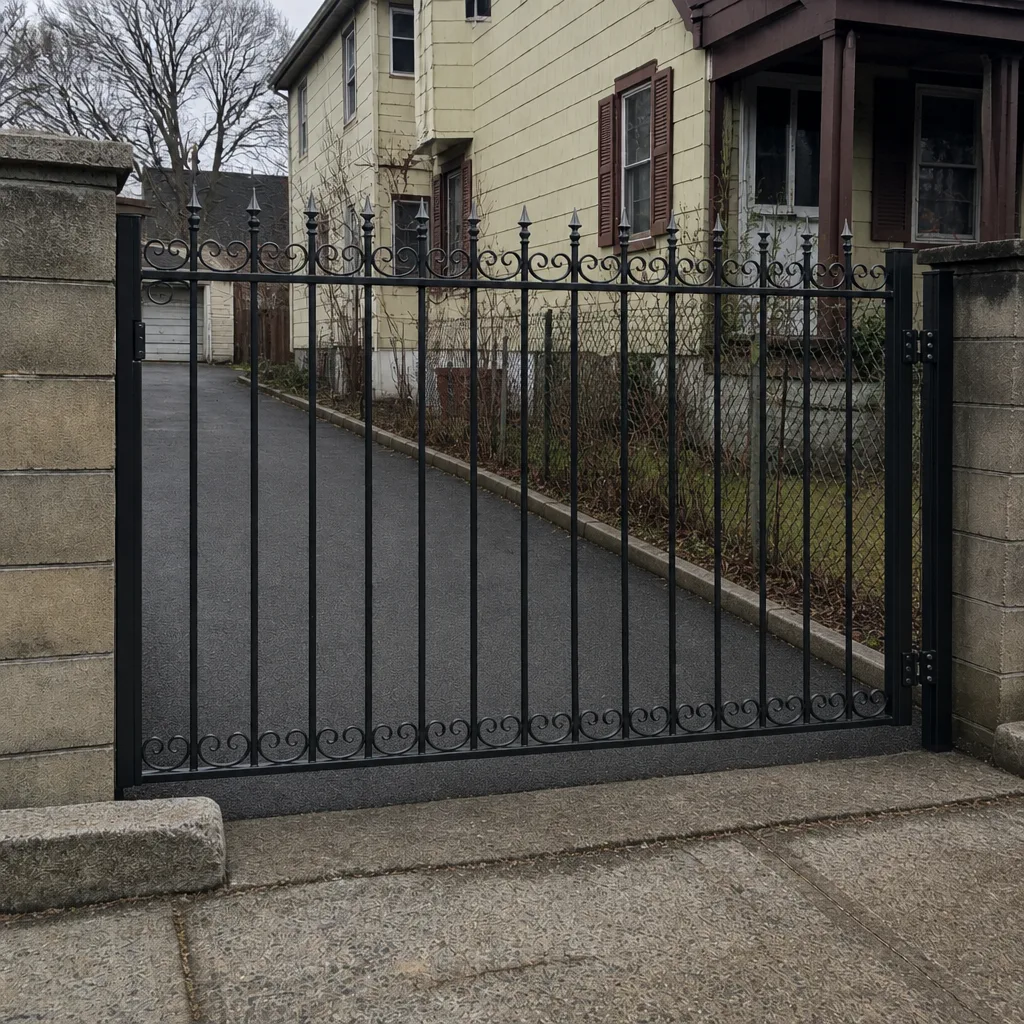
See the difference
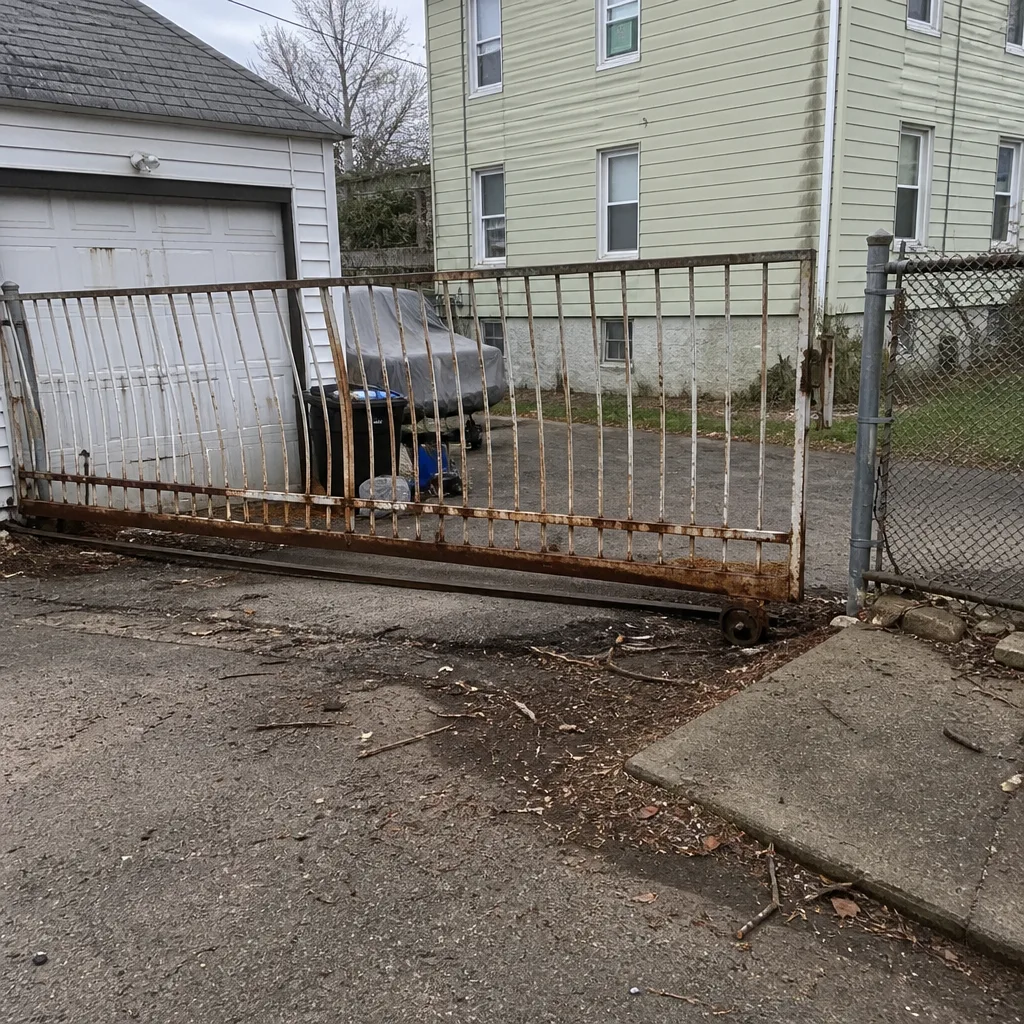 Before
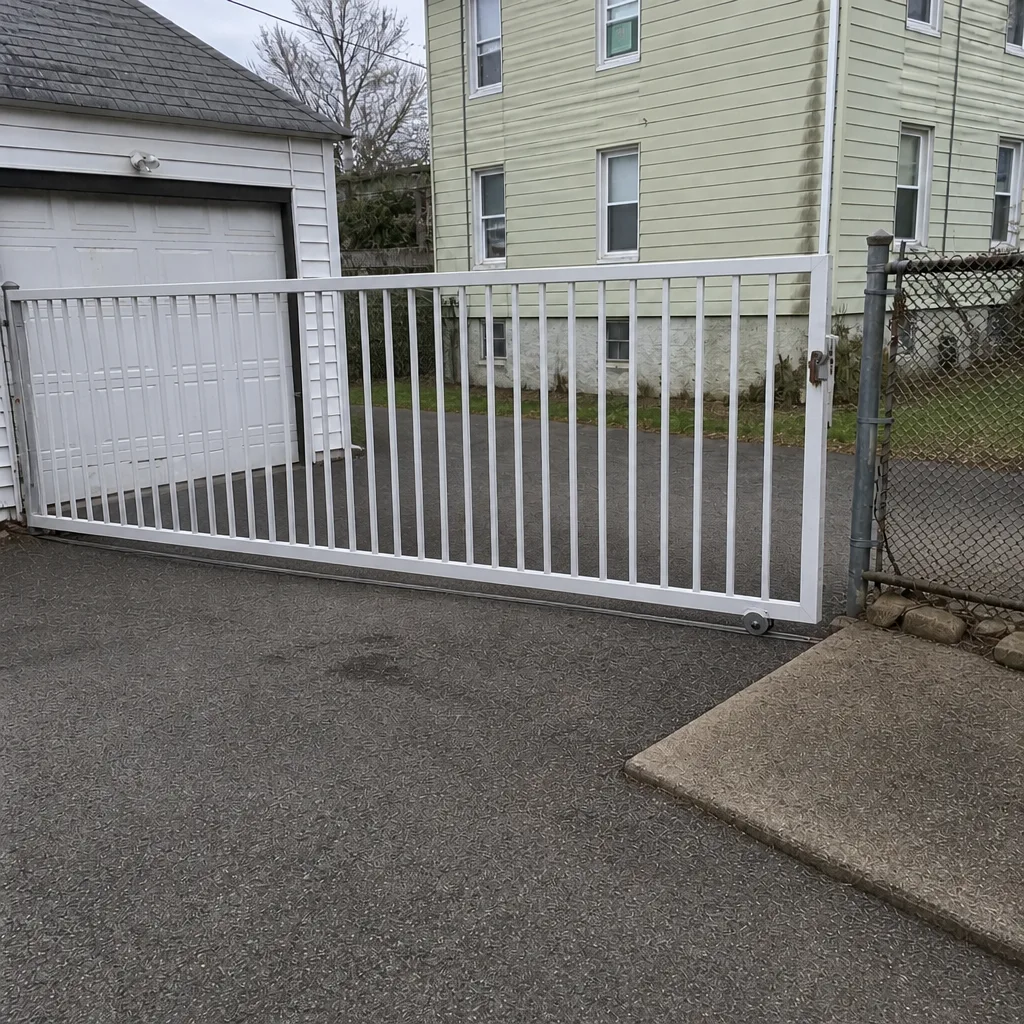 After
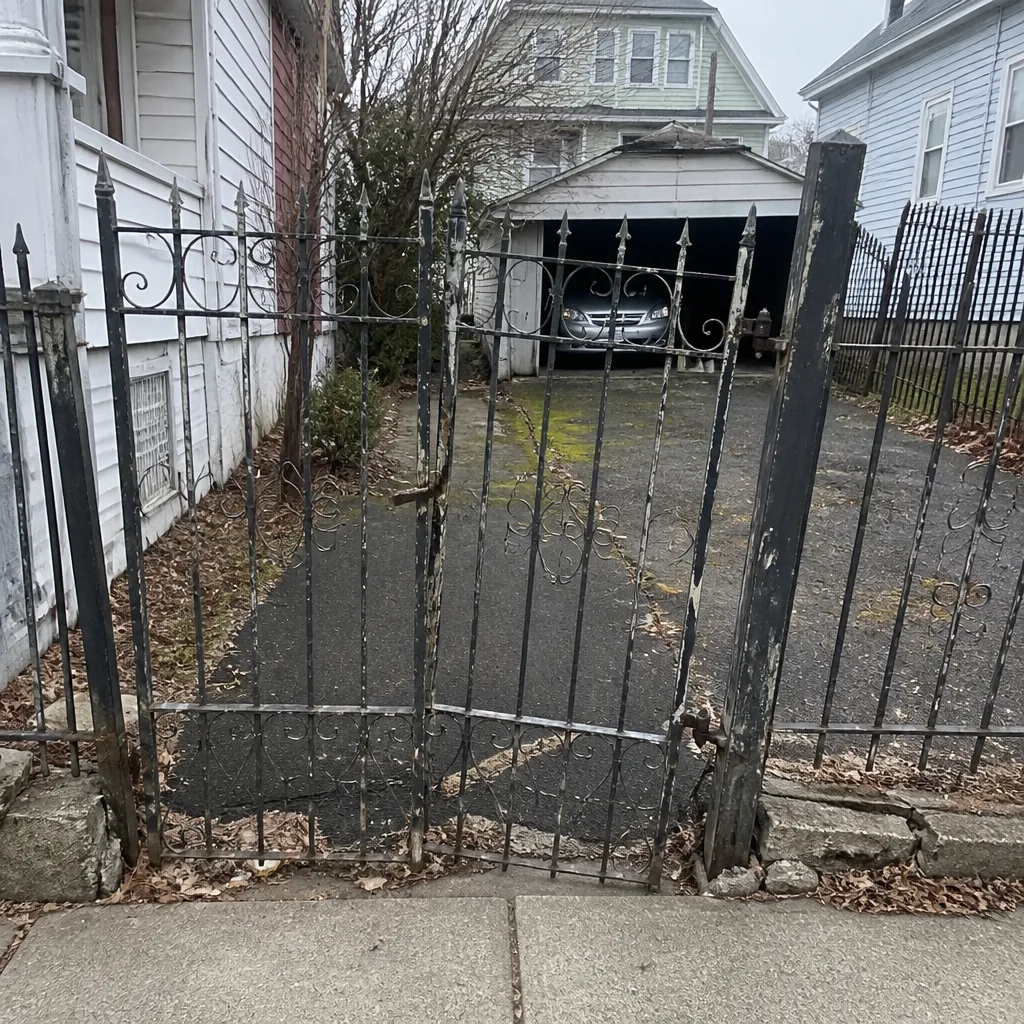 Before
 After
 Before
 After
When to Call a Professional
Call a professional when the gate swings on its own, when posts or footings show movement, when a hinge has pulled or the frame has racked, when the operator stops or reverses with no visible obstruction, or when wiring, control boards, loop detectors, or intercoms are involved. Those last items carry a genuine hazard, and a control board or an underground power run delivered wrong is a serious safety problem. They should be handled by a trained technician with the right meter and the brand knowledge to diagnose them, not by a general handyman guessing at a wiring fault. Gate Repair Paterson offers free estimates in Paterson. Call (833) 946-4320. We answer 24/7. Fast dispatch from 7am to 7pm, Sunday through Friday. Our technicians have up to 13 years of experience, and the price is set per job by the written estimate, agreed before any work starts.
Frequently Asked Questions
Most gate repairs in Paterson are priced per job after an on-site diagnosis, with the written estimate setting the final price before any work begins. The cost depends on the root cause: an adjustment or a safety-sensor re-aim is far less than a post re-plumb, a control board swap, or an operator replacement. Because the diagnosis is what determines the price, we don’t quote over the phone from a description. The estimate is free, so the number you get is a real one. Call (833) 946-4320 for an exact quote – estimates are free.
No, a gate that swings open on its own is almost always a hinge or post-plumb problem, not a lock problem. The gate is telling you the hinge post has leaned off plumb and gravity is taking the gate downhill. Replacing the lock just masks the failure until the gate stops closing altogether. What you need is a plumb check of the hinge post and an inspection of the footing before anything else. Call (833) 946-4320 for a diagnosis – estimates are free.
Yes, and a gate that won’t close is one of the most common calls we get, with a safety sensor out of alignment or a control board fault at the top of the list. The first step is disconnecting the operator and swinging the gate by hand: if it moves freely, the fault is electrical or in the operator logic, not the gate. We diagnose LiftMaster, FAAC, BFT, Linear, and other major operators with brand-specific knowledge. Call (833) 946-4320 to book an on-site evaluation.
Yes, a full gate installation includes the operator wiring, the power run, the safety edges, and the controls, and we plan for all of it before a single post is set. Because new installation work is measured and scheduled rather than dispatched like a repair, we start with a free measure and a written price so you know exactly what the job includes. Call (833) 946-4320 to schedule your measure and estimate.
Nighttime drift is the classic sign of a post out of plumb combined with a latch that isn’t holding, and it often gets worse after a freeze or a wet stretch when the ground under an older footing moves. The gate isn’t being opened by anything; it’s settling downhill because the hinge geometry has changed. This is a structural diagnosis, and the fix is usually a plumb correction and footing repair rather than a lock replacement. Call (833) 946-4320 for a free estimate.
A full installation includes the new gate, the posts and footings set to proper depth, the operator sized and matched to the gate, all safety devices including photo eyes and safety edges, the power and control wiring, and the access controls such as keypads and intercoms. We measure the actual opening first, because a gate sized to a suburban spec won’t fit a narrow Paterson driveway, and the operator has to match the gate rather than the other way around. Call (833) 946-4320 for a free measure and written estimate.
The Bottom Line
Most gate problems in Paterson trace back to one of three root causes: a footing or post that’s moved, an operator that’s mismatched to the gate it’s driving, or hinge wear that was deferred until it pulled the frame out of square. Every one of them starts with a symptom somewhere else: a latch that won’t catch, a remote that won’t work, a gate that won’t close. The whole value of a proper diagnostic chain is separating the symptom from the cause before anyone touches a part. Start with plumb, then hinges, then the frame, then the operator and its safety devices. Get that order right and the repair is usually smaller than you feared. Get it wrong and you pay twice. If you’d rather have it diagnosed correctly the first time, call us. We only work on gates, and it shows.
If your gate is misbehaving, we’re ready to take a look. Call (833) 946-4320 for a free estimate. We answer 24/7. Fast dispatch from 7am to 7pm, Sunday through Friday. We serve homeowners and property managers across Paterson, and we’ll give you a written price agreed before any work starts. Gates are all we do.
Written by the team at Gate Repair Paterson.