
Last updated November 15, 2026
 Wrought iron
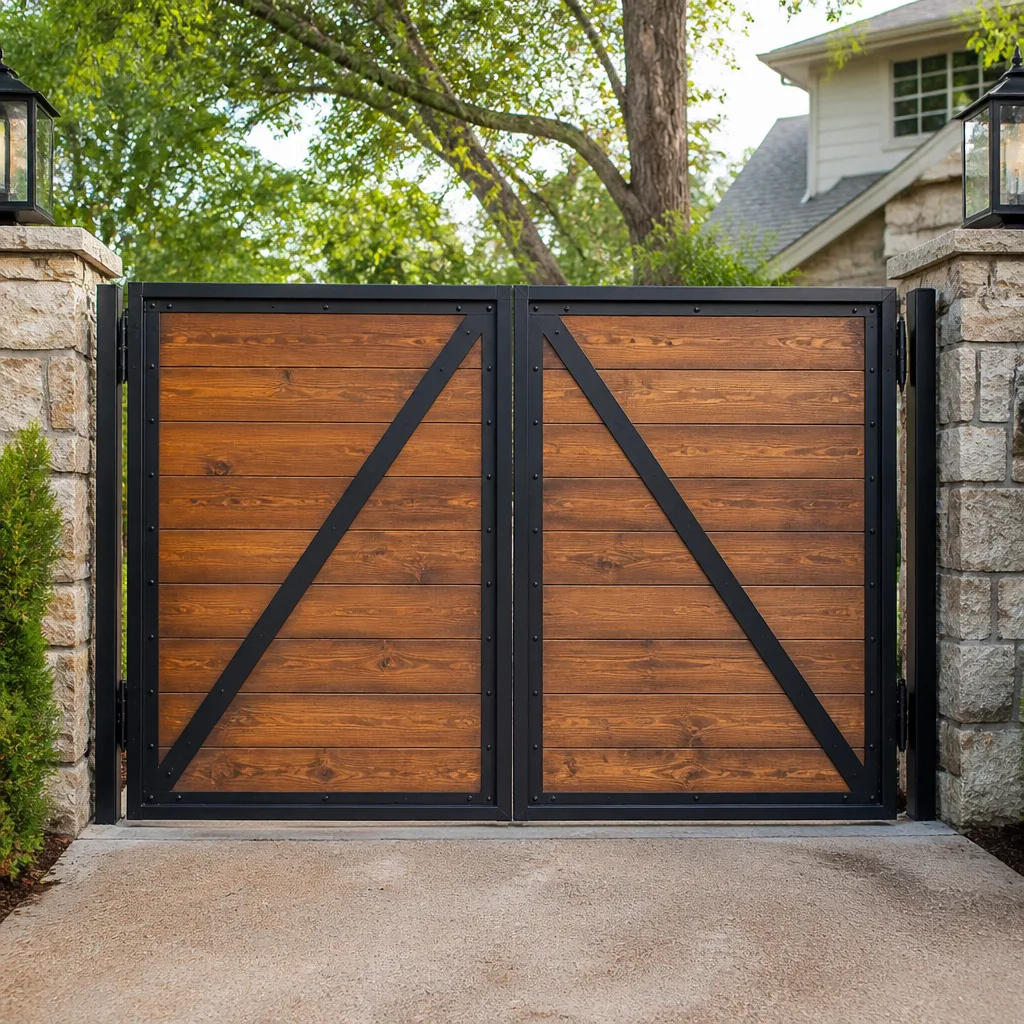 Wood & steel frame
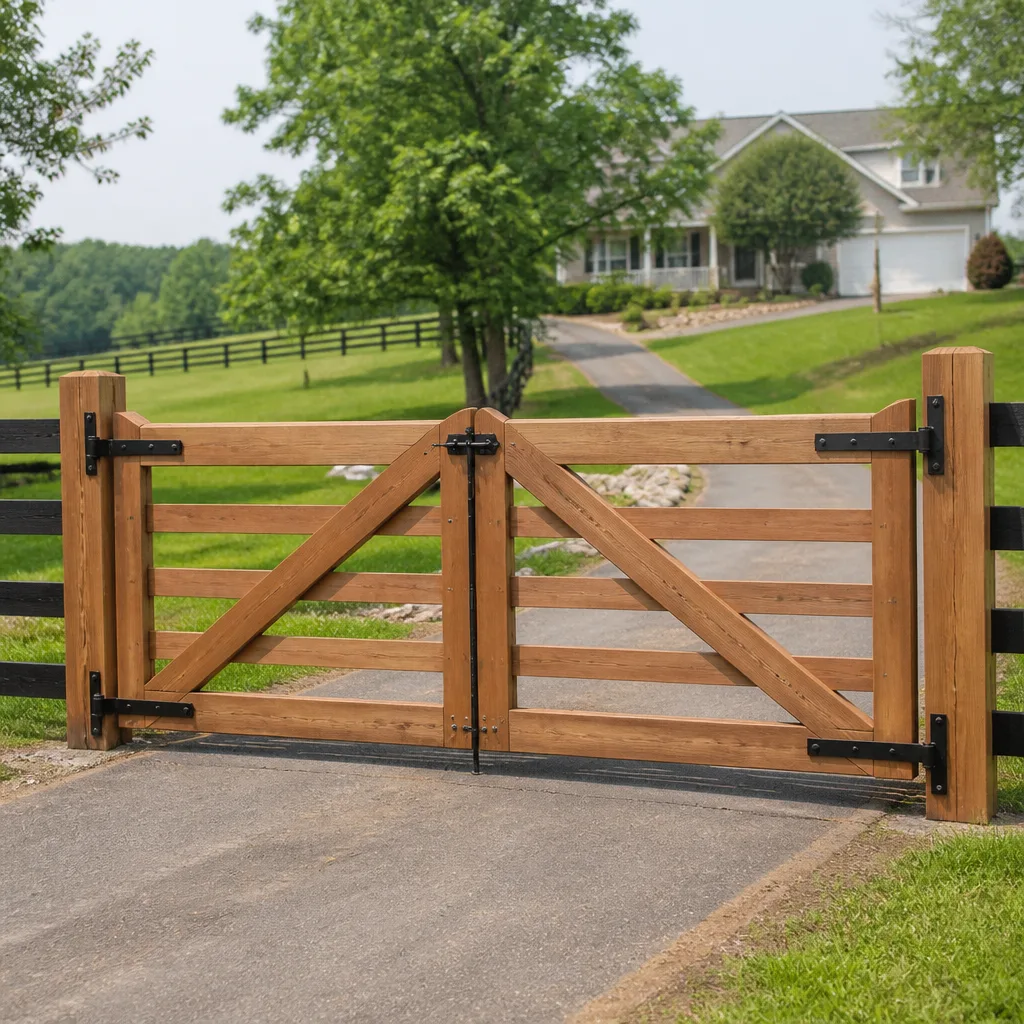 Farm & ranch
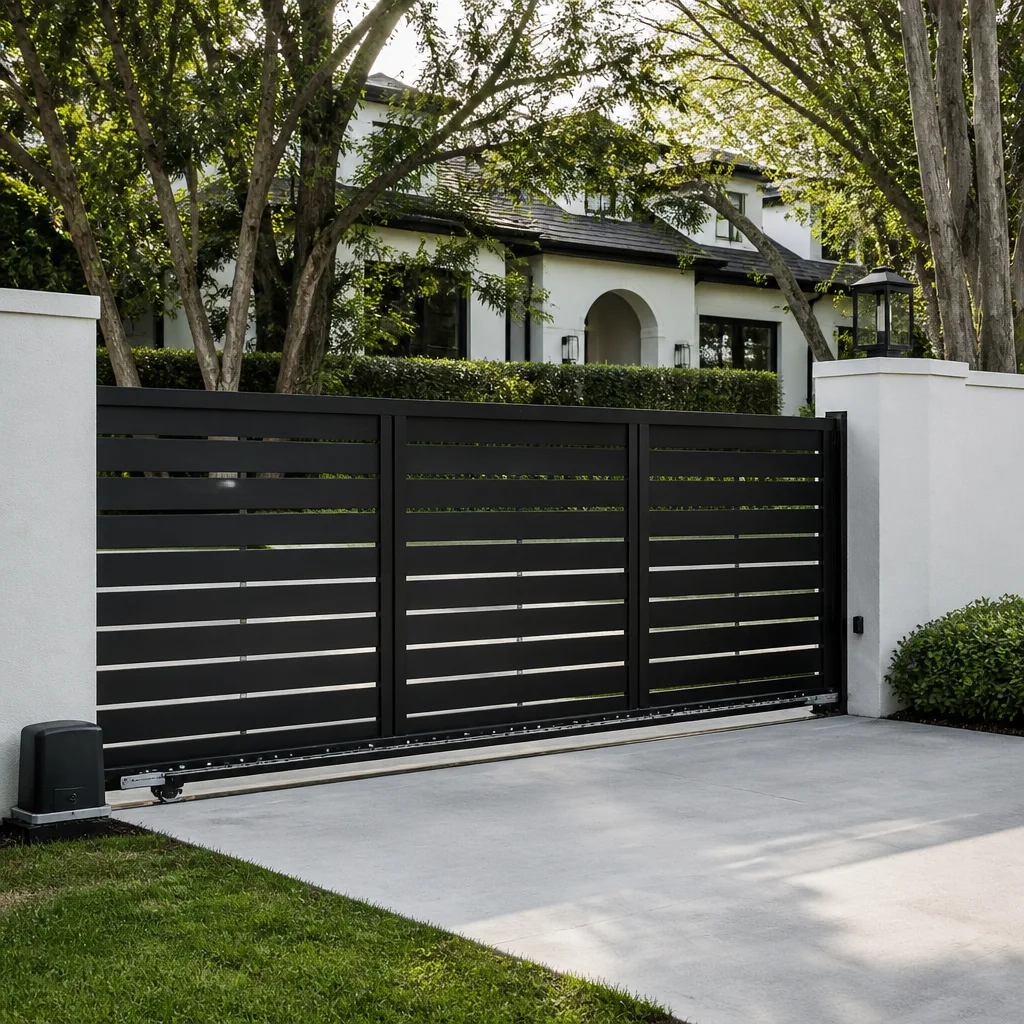 Sliding driveway gates
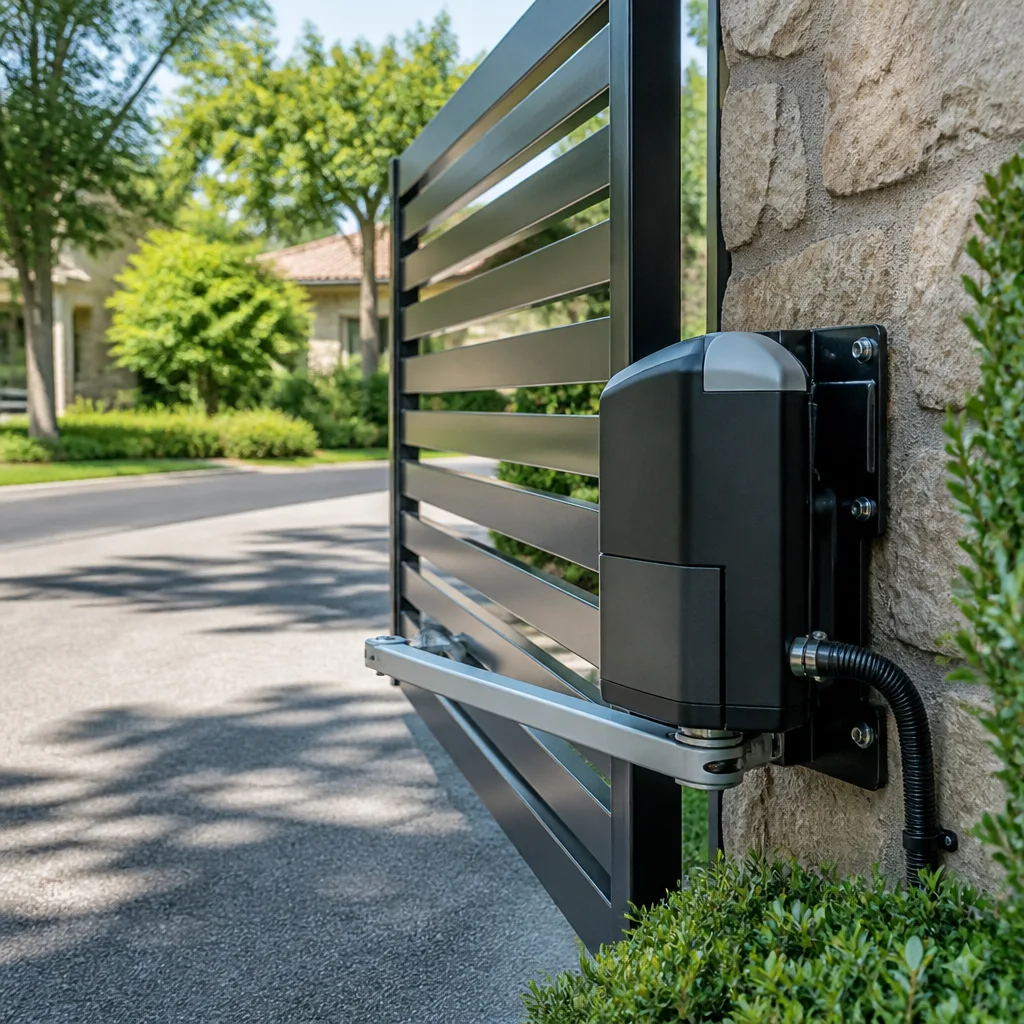 LiftMaster operators
Free on-site gate assessment - hinges, posts, and your LiftMaster or Nice gate operator checked before anything is quoted
The assessment is free and the quote is the invoice.
Get your free estimateSeasonal Gate Repair Care for Paterson: Year-Round Homeowner’s Guide
The call that wakes us up most in January is a hydraulic actuator that cracked over the cold snap. Almost always, the failure began back in October, in a reservoir nobody topped off before the first freeze. Gates don’t wear out in neat even amounts. In Paterson, the freeze-thaw cycles, the humid summers and the leaf drop each put pressure on different parts of the same gate, so a care routine that repeats the same checklist four times a year misses most of what actually breaks. This guide walks through what to watch each season, what you can safely check yourself, and when to bring in a technician.
Quick Answer
Seasonal gate care in Paterson means matching your inspection to what the weather is doing, not running the same list every quarter. Winter freeze-thaw heaves posts and stresses hydraulic seals, spring exposes ground movement and operator wear, summer heat causes steel gates to bind, and fall leaf debris jams loop detectors. Check footings, hinges, loop zones and hydraulic fluid and battery backup each in their own season, and call a gate specialist the moment an operator, footing or safety device fails.
Styles & brands we work with
- Wrought iron
- Wood & steel frame
- Farm & ranch
- Sliding driveway gates
- LiftMaster operators
Table of Contents
- Why Paterson Gates Need a Seasonal Approach
- Winter: Freeze-Thaw and What It Does to Your Gate
- Spring: The Post-Winter Inspection Sequence
- Summer: Thermal Expansion and Intermittent Binding
- Fall: Loop Detectors and Leaf Accumulation
- The Two Overlooked Operator Components
- Common Mistakes to Avoid
- When to Call a Professional
Why Paterson Gates Need a Seasonal Approach
Paterson sits in a climate with four genuinely distinct operating conditions, and a gate that opens and closes a dozen times a day sees every one of them. The ground under a gate post isn’t constant. In a hard freeze it expands, in a thaw it softens, and over a few winters that cycle works on the concrete footing the same way a slow lever works on a stuck lid. Meanwhile the steel, wood and hydraulic parts of the gate are expanding and contracting on a different schedule, driven by temperature and humidity rather than by the soil.
Most gate problems trace back to one of four seasonal pressure points:
- Freeze-thaw ground movement shifts posts and footing, which throws the gate out of alignment and strains the operator.
- Spring thaw reveals what winter did to the footing, hinges and operator housing in one inspection window.
- Summer heat expands steel gate frames and leaf panels, so clearances that worked in April start to bind in July.
- Fall leaf drop fills the loop detector saw-cut and the drainage channel around an automated gate, triggering false detections and missed vehicle picks.
None of these are catastrophic on their own. They compound. A gate whose footing has heaved a half inch will wear its hinges faster, strain the operator arm, and start tripping the safety reverse. By the time it stops opening, several small seasonal issues have stacked up. That’s why care in Paterson works best when you address the component under seasonal stress before the next stress arrives.
If you’re not sure which season you’re dealing with or which part is actually failing, reaching out early saves money. A quick inspection beats waiting for a hard failure. gate repair here is mostly about catching the small alignment and wear issues before they turn into an operator replacement.
Winter: Freeze-Thaw and What It Does to Your Gate
Winter is the season that exposes everything the other three seasons loosened. Freeze-thaw cycles repeatedly wet and frozen the soil around a gate post, and each cycle lifts the footing a fraction. A post that’s heaved even slightly means the gate leaf no longer swings square in its frame. On automated gates, the operator compensates by pushing harder, which stresses the arm, the hinges and the motor. On a sliding gate, a settled track throws the whole carriage off line and the gate drags or jumps.
Here’s what to monitor in a Paterson winter:
- Post movement: Watch for a gate that starts to sag, scrape, or close unevenly. A post that rocks by hand is an immediate call.
- Hinge strain: Listen for creaking and check for visible gaps at the hinge plates.
- Hydraulic fluid: Cold thickens hydraulic fluid, so a hydraulic operator may run sluggish in January. A reservoir that wasn’t topped off or checked before the freeze can stress the seals and crack the housing, which is the expensive repair of the year.
- Ice and snow buildup: Never let snow pile against a gate leaf or pack into a track. Clear the swing arc and track path before you operate the gate.
- Battery backup: Cold drains batteries. A backup battery that’s already weak may fail entirely at the first hard freeze.
What warrants immediate re-setting versus what you can monitor comes down to movement. A cosmetic bit of surface chipping on the concrete isn’t urgent. A post that has visibly shifted, a gate that drags on the ground, or an operator that has to fight the gate is. Those get a technician out to re-set the footing rather than a homeowner patching around the problem.
Door operators from FAAC and BFT are common on residential swing gates here, and both are sensitive to an operator that’s working against a misaligned gate. If your operator is struggling in the cold, that’s usually the gate, not the motor.
Spring: The Post-Winter Inspection Sequence
Spring is the season to confirm what winter did. The ground has thawed, so footing problems are visible again, and everything you couldn’t check through the cold is now accessible. Run the inspection in a fixed order so you don’t miss a step. Here’s the sequence we recommend for a Paterson gate once the ground has thawed:
- Walk the footing first. Look for cracks radiating from the post base, soil that has pulled away from the concrete, and any tilt in the post. This is the foundation for everything else, so check it before touching the gate.
- Test the gate by hand with the operator disengaged. Push the gate through its full travel. It should move smoothly and return to the same closed position every time. Any binding, catching or slop in the hinges shows up here.
- Inspect hinges and hardware. Look for rust at the hinge plates, loose bolts and worn bushings. Winter freezing can crack a bushing that then crumbles in spring.
- Check the operator housing and arm. Look for water intrusion, corrosion at the mounting bracket, and any oil seepage around hydraulic units. Spring is when a slow leak from winter stress becomes obvious.
- Re-engage the operator and run a full open-close cycle while watching the safety devices respond. If the gate reverses when it shouldn’t, or fails to reverse when it should, stop and call a specialist.
- Test the safety edges and loop detectors by walking the protected zone while the gate is in motion. This is the single most important safety check of the year.
Footing problems are the spring repair we see most often in Paterson, and they’re the ones homeowners most often ignore. A gate that looks fine but has a footing starting to lift will progressively wear every other component. That’s the repair that pays for itself fastest.
The control side of an automated system is where a general handyman runs out of depth. Electrical gate repair covers control boards, safety sensor alignment, loop detectors and access-system wiring, and it’s worth having that checked by someone who works on electric operators specifically. If winter left your operator behaving oddly, that’s the call to make.
Summer: Thermal Expansion and Intermittent Binding
Summer heat causes steel gates to grow. It sounds like an exaggeration until you own a steel gate that runs clean in April and suddenly scrapes in July. Steel expands with temperature, and on a gate with tight manufacturing tolerances or a narrow clearance between the leaf and the post, the expansion is enough to close a gap that used to be open. The result is intermittent binding: the gate opens fine in the morning, drags in the afternoon, and works again after the sun goes down.
That intermittency is the giveaway. A gate that fails consistently has a mechanical problem. A gate that fails only at the hottest part of the day has an expansion problem.
How to manage summer thermal expansion:
- Check clearances at the hottest time of day. Bring the gate to the point where it’s binding, then look for the metal-on-metal contact point. That’s the spot to adjust.
- Lubricate hinges and tracks with a heat-stable product. On sliding gates in particular, a dry track plus heat is a binding recipe. Clean the track and re-lubricate it.
- Leave a small temperature allowance in gate adjustment. A gate adjusted to zero clearance in cool weather will bind in summer heat.
- Check operator limits in the heat. An operator that’s just barely closing the gate in the morning may fail to reach the limit in the afternoon, causing it to reverse repeatedly.
Summer humidity works on the other side of the gate. Wood gate leaves start to swell and rot at the base where they touch the ground. Steel gate frames surface-rust where the paint has chipped. Neither is dangerous, but both progress faster in Paterson’s humid summers than in a dry climate. Give the gate a coat of paint or sealant where the finish has failed before the humid stretch.
If an operator from Linear or Viking is cutting out in the heat, it’s worth having the limits and the control logic checked. Those operators, like most residential units, are tuned for a specific gate travel, and a gate that’s binding in the heat is working against the operator.
Fall: Loop Detectors and Leaf Accumulation
Fall leaf drop is the single biggest cause of phantom gate problems on automated properties in Paterson. The culprit is almost always the inductive loop detector: the buried wire loop in the driveway that tells the operator when a vehicle is present. It works by sensing the metal mass of a vehicle over the loop. When wet leaves pack into the loop zone, or debris fills the saw-cut the loop runs through, the detector’s sensitivity shifts. The result is false triggers, phantom closures, and gates that refuse to close because something (the wet leaves) is registering as a vehicle.
Before the leaves fall, do this:
- Clear the saw-cut. The saw-cut is the fill line around the loop. Blow out leaves, dirt and debris so the loop sits clean in its housing.
- Check the loop boundary. Look for exposed wire or a loop that’s lifting out of the pavement. That needs a specialist, not a homeowner with a shovel.
- Watch for false triggers. A gate that closes on you when you’re not there, or refuses to close when you are, is telling you the loop sensitivity has drifted.
- Don’t rake leaves into the loop zone. Leaf piles sitting on the loop zone all fall are the fastest way to get a nervous detector.
The same leaf accumulation that hits loop detectors fills the drainage and clearance channels on a sliding gate. Wet leaves pack into the track and prevent the carriage from running clean. Clear the track every week in peak-leaf season if the gate sits under trees.
If your operator is a DoorKing unit with an access-control loop, the loop and the controller need a coordinated check. A loop detector that’s drifted and an access board that’s fine is a common fall combination.
The Two Overlooked Operator Components
Two operator components do most of the invisible work and get almost none of the attention during a seasonal check. Both need climate-specific attention, and both fail in predictable ways if you skip them. On a gate with an automated operator, ignoring these two costs far more than checking them.
Battery backup. Most modern operators include a battery backup so the gate still opens when the power is out. That battery has a lifespan measured in years, and it degrades faster in temperature extremes. In Paterson, the cold of January drains it and the heat of July stresses it. A battery that’s three or four years old and has been sitting in an outdoor operator housing is a candidate for replacement before it fails and leaves the gate dead during an outage. Check the backup battery each spring and fall. If the gate won’t open during a simulated power cut, the battery has failed.
Hydraulic fluid. Hydraulic operators don’t breathe the way electric operators do, but they do lose fluid slowly and they do respond to temperature. Cold hydraulic fluid is thick, so a January morning puts more load on the pump and the seals than a July morning. Fall is the time to have the fluid level and condition checked. A reservoir that’s low on fluid, or one that hasn’t had the fluid refreshed in years, is much more likely to crack a seal or a housing in the first freeze. This is the repair we’d point to as the most predictable seasonal failure on hydraulic operators.
If your operator is a FAAC or BFT hydraulic unit, both are worth having looked at once a year for exactly this reason. A five-minute fluid check in October beats a new actuator in January.
The other operator components worth a seasonal glance are the control board and safety sensor alignment. Control boards are sensitive to moisture intrusion and power surges, and sensor alignment drifts when the gate or the post shifts. Check both when you check the backup battery and the hydraulic fluid.
Common Mistakes to Avoid
- Running the same checklist every season. The seasonal stress on a gate changes with the weather. A generic quarterly check misses the freeze-thaw footing problem in winter and the loop detector problem in fall.
- Adjusting out the thermal allowance in summer. Owners who set gate clearance to zero when it’s binding in July discover the gate fails to close in October. Leave a few millimeters of clearance for temperature swing.
- Ignoring a post that moves by hand. A post that rocks or has lifted is a footing problem, and it gets worse every freeze. Re-setting the footing early is far cheaper than repairing the operator and hinges that follow.
- Waiting for a hard failure on a battery backup. The power outage that exposes a dead backup battery is usually the same outage that leaves the gate stuck. Replace the battery on a schedule, not on a failure.
- Topping off hydraulic fluid with the wrong fluid or ignoring a slow leak. The reservoir level and the fluid spec both matter. A wrong fluid or a leak that’s left alone is what cracks the housing in winter.
- Raking leaves into the loop zone. Leaf piles on an inductive loop are the fastest way to get false triggers, missed vehicle detection and a gate that won’t close. Clear the loop zone, don’t cover it.
- Re-engaging the operator before checking the gate by hand. The operator is strong enough to force a binding gate, which hides the mechanical problem behind a motor that’s straining. Always test by hand first.
When to Call a Professional
Call a gate specialist when a post is rocking or visibly shifted, when the operator is straining, reversing unexpectedly or failing to reach its limits, or when a safety edge or loop detector isn’t responding correctly. Those are the failures that get worse if you patch around them. Electrical gate repair and control board diagnosis need the right tools and experience; a general handyman can’t chase down a loop detector that’s drifted its sensitivity, and shouldn’t try.
If you’re at all unsure, get an on-site look. Most of the expensive repairs we see in Paterson are the result of a small seasonal issue that went unaddressed through a second winter. Gate Repair Paterson offers free estimates in Paterson, covering both manual and automated gates, and the written estimate is agreed before any work starts. Call (833) 946-4320. We answer 24/7. Fast dispatch from 7am to 7pm, Sunday through Friday. Our technicians have up to 13 years of experience with operators from FAAC, BFT, Linear, Viking and the other major brands.
Whether your operator needs a board swap or a full replacement, the diagnosis comes before the quote. Gates are all we do, so the technician who shows up has the brand knowledge to shortcut the guesswork.
Frequently Asked Questions
The footing is the single most important thing to check each spring in Paterson. A post that has heaved or shifted from winter freeze-thaw is the root cause of most of the downstream wear, from hinge strain to operator failure. Check the footing first, before you touch the gate or the operator.
Steel expands with heat, so a gate adjusted to tight clearance in cool weather can bind at the hottest part of the day. It’s a thermal expansion problem, not a broken mechanism, and the fix is to adjust the clearances and leave a bit of temperature allowance. If the binding is severe or persistent, have it checked.
In fall, a gate that opens or closes on its own or refuses to close is almost always a loop detector problem caused by leaves, debris or wet leaf accumulation over the buried loop. Clear the saw-cut and the loop zone before you assume the operator has failed. If it persists after clearing, the loop sensitivity has drifted and a specialist should check it.
Check the battery backup each spring and fall. A backup battery degrades faster in temperature extremes, and Paterson’s cold winters and humid summers are hard on an outdoor operator housing. The simplest test is to cut power to the operator and confirm the gate still opens. If it doesn’t, the battery is due for replacement.
Have hydraulic fluid checked in fall, before the first freeze. Cold thickens hydraulic fluid and puts more load on the pump and seals, and a low reservoir is much more likely to crack a housing in January. A five-minute fluid check in October is the cheapest prevention you can do on a hydraulic operator.
You can safely do the visual parts: checking for post movement, listening for hinge creak, watching the loop zone for leaves, and simulating a power cut for the battery backup. You should not adjust the operator, re-set a footing, or work on the wiring or hydraulic fluid yourself. Those need a trained technician working on the right equipment. Call (833) 946-4320 for a free estimate on anything you’re not sure about.
The Bottom Line
Seasonal gate care in Paterson isn’t one checklist repeated four times. It’s a different focus each season: footing and hydraulic seals in winter, a post-thaw inspection in spring, thermal clearance in summer, and loop detector clearing in fall. The common thread is that every one of these checks is cheap and most of the failures they prevent are not. A gate that starts the year with a wobbling post ends the year with an operator replacement. Check the footing in spring, check the fluid and battery in fall, keep the loop clean, and call a gate specialist when an operator or safety device is fighting you. The written estimate sets the price before any work starts, so the cost of a diagnostic check is the only number you’ll see until you agree to the repair. Call (833) 946-4320 for a free estimate. We answer 24/7, with fast dispatch from 7am to 7pm, Sunday through Friday. Get your gate moving again today.
Written by the team at Gate Repair Paterson.
See the difference
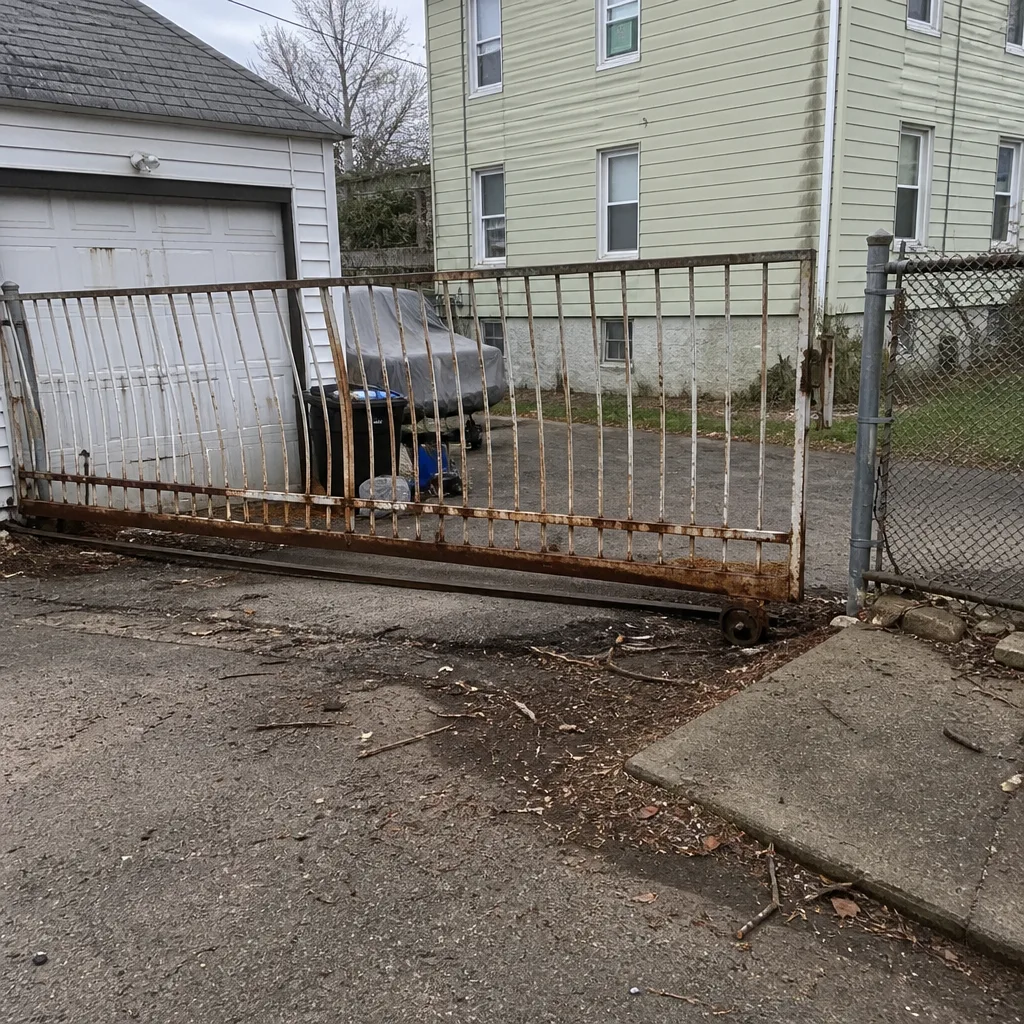 Before
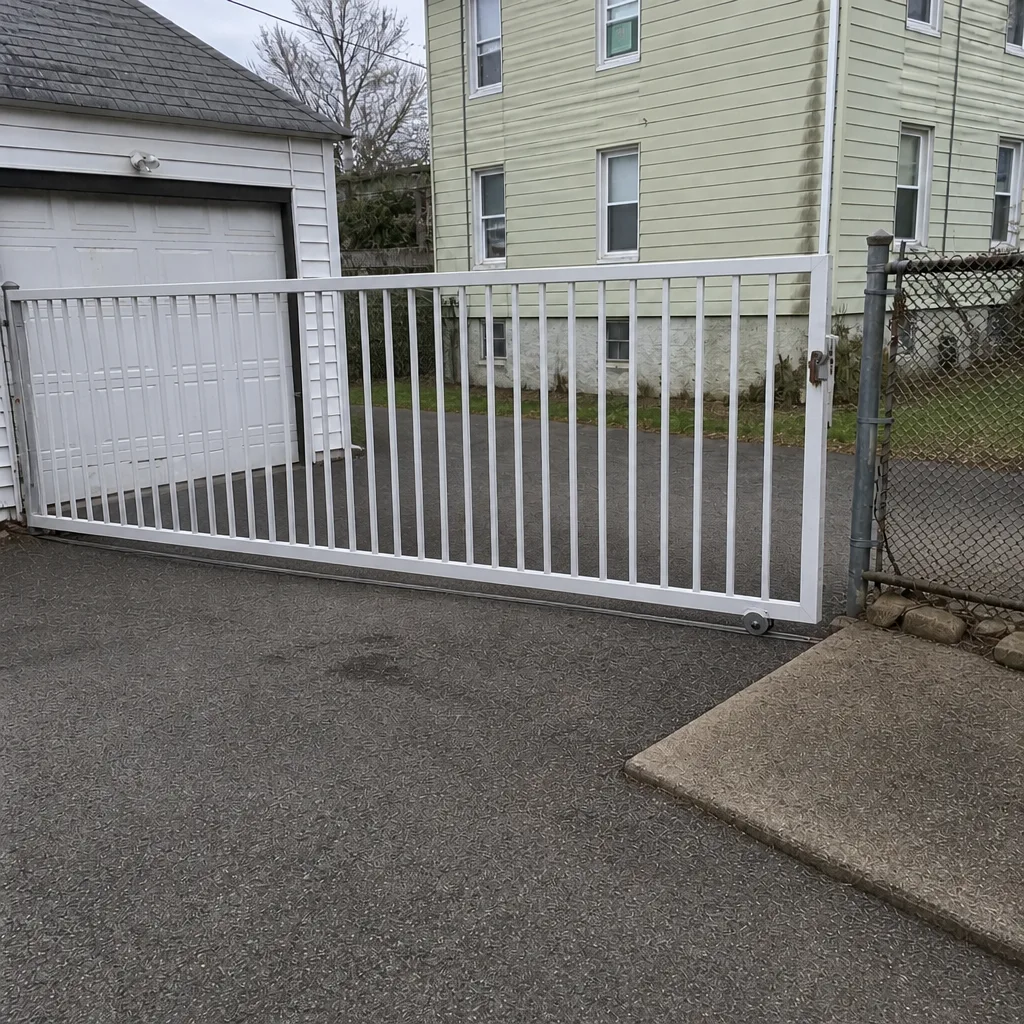 After
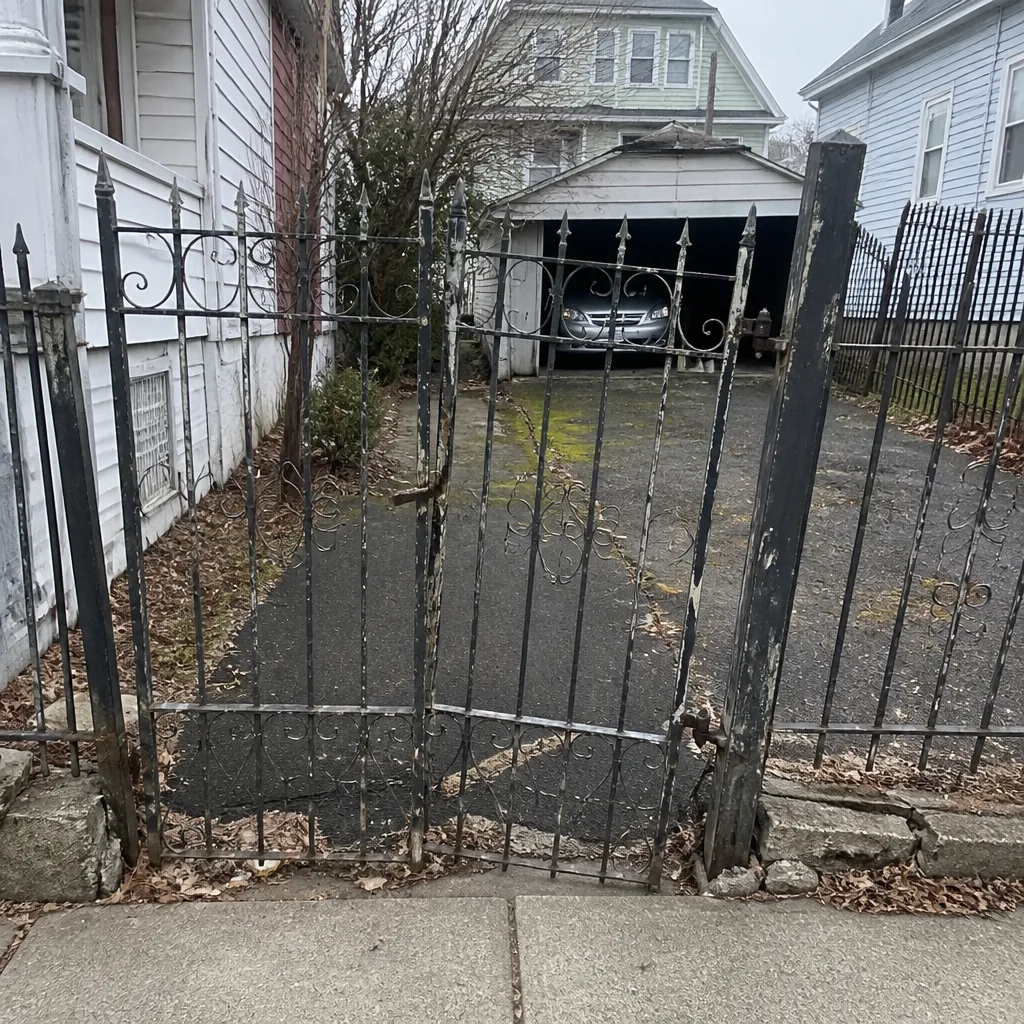 Before
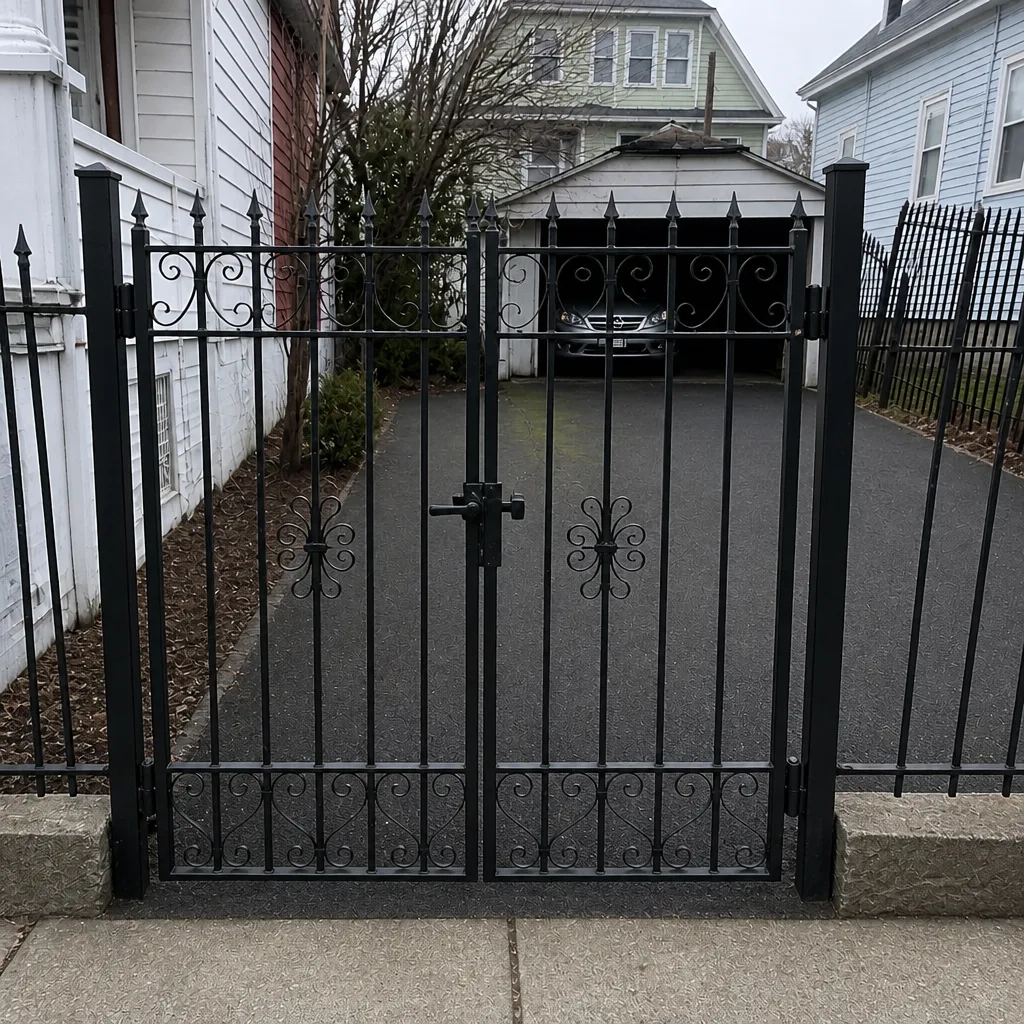 After
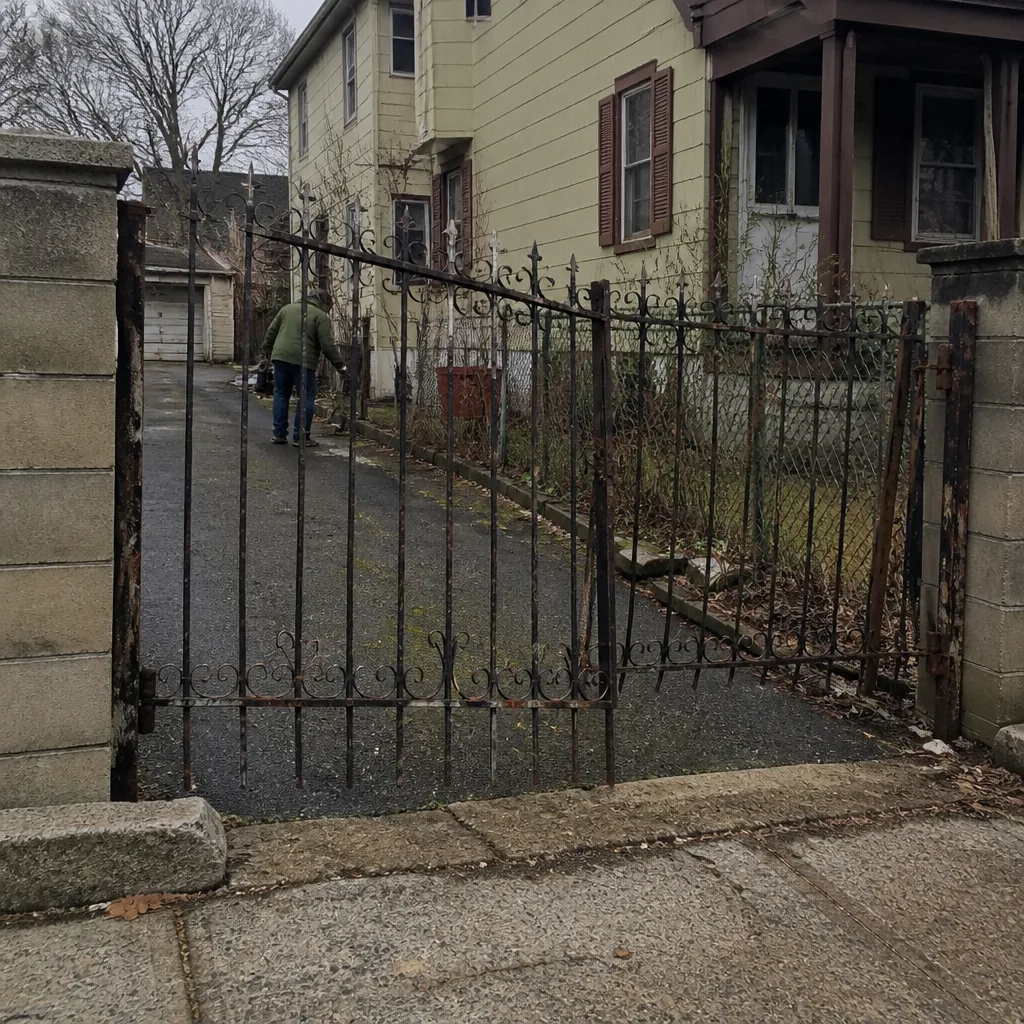 Before
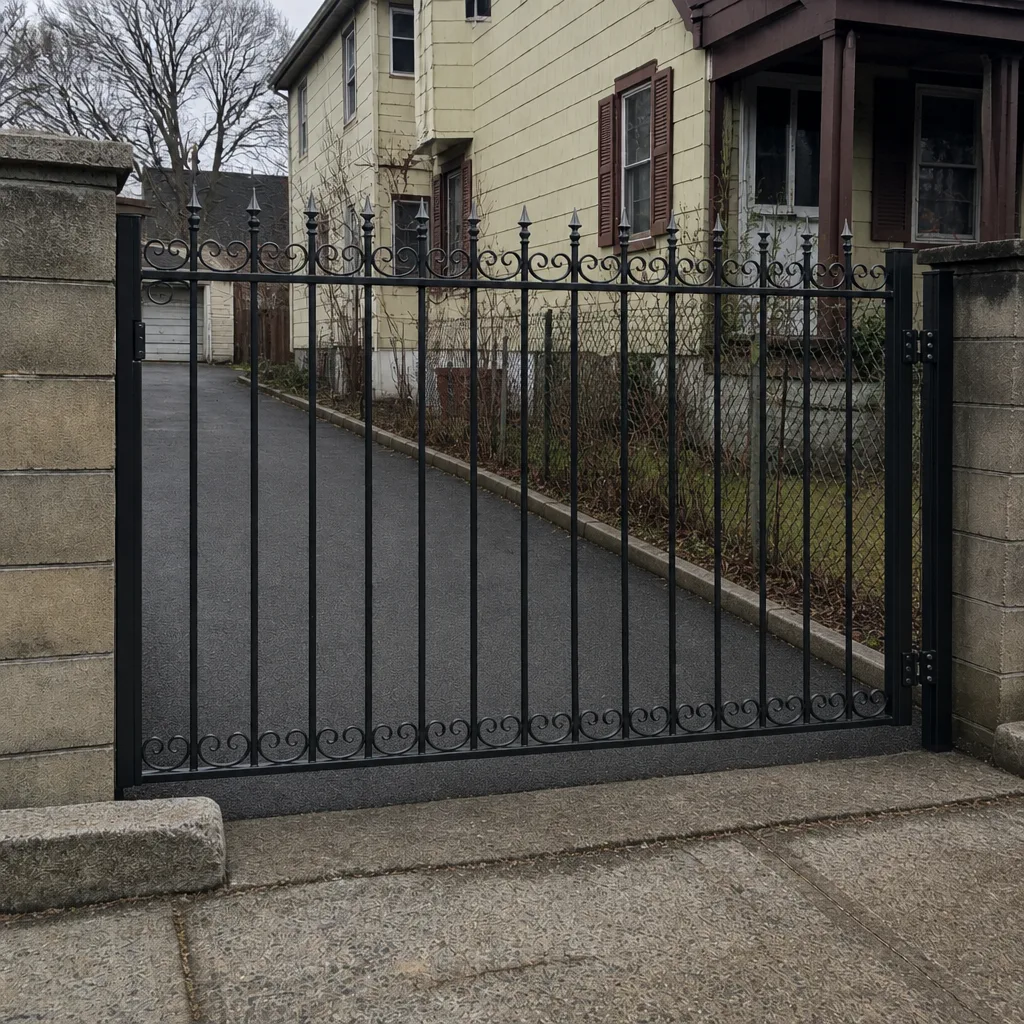 After