
Last updated November 15, 2026
 Wrought iron
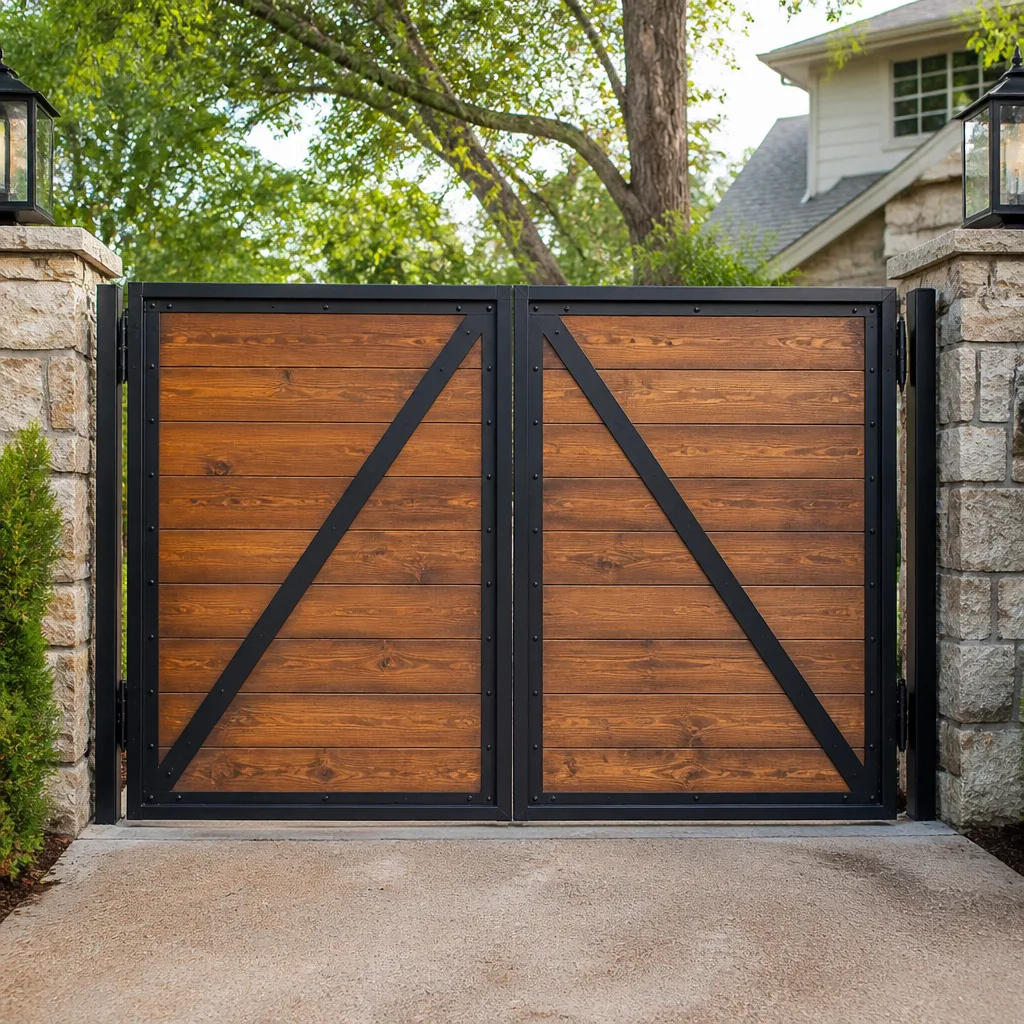 Wood & steel frame
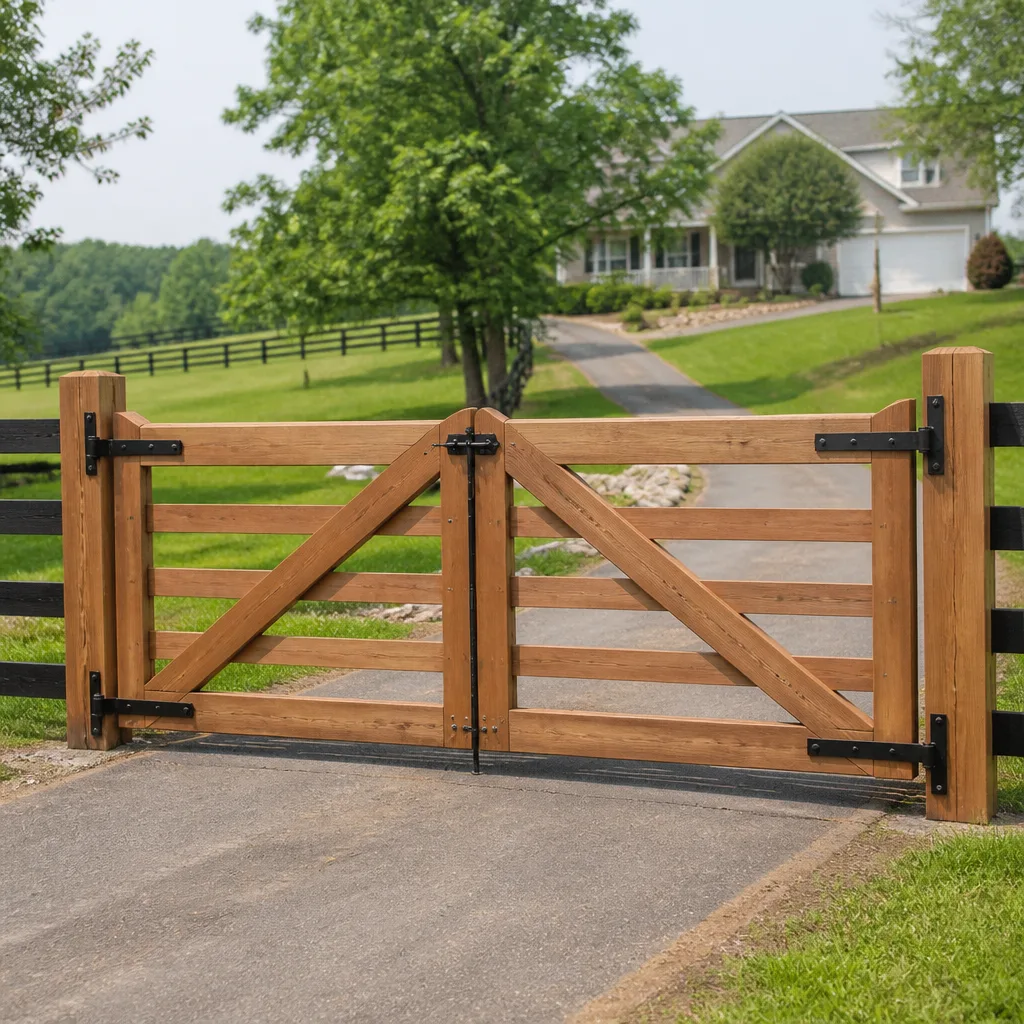 Farm & ranch
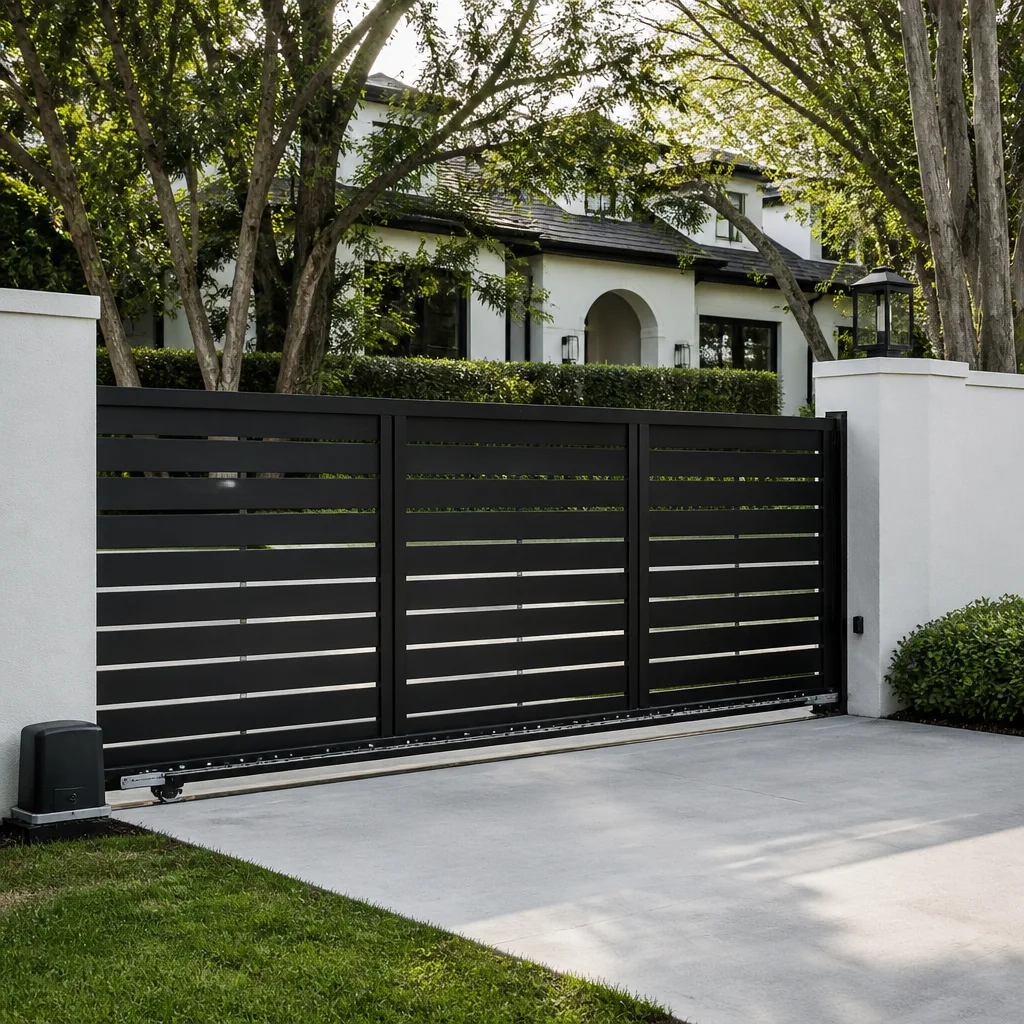 Sliding driveway gates
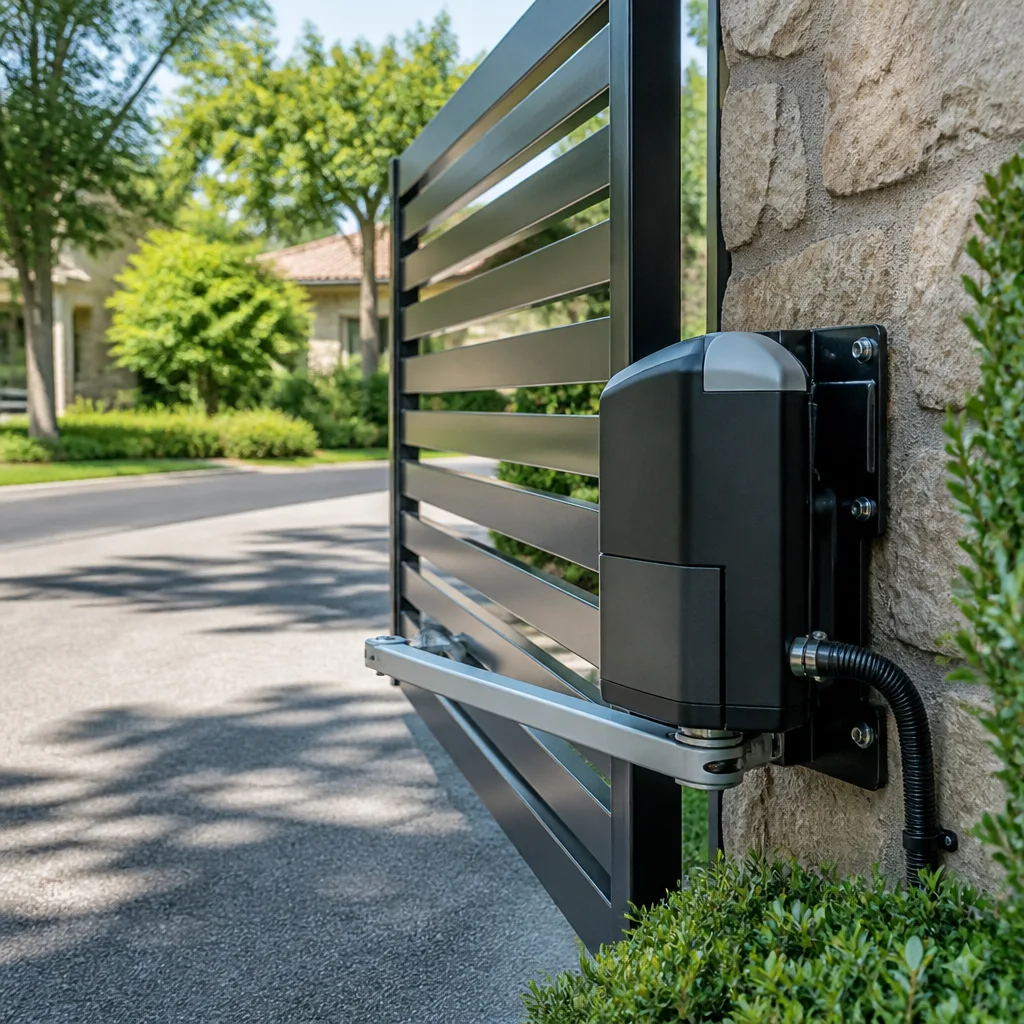 LiftMaster operators
Free on-site gate assessment - hinges, posts, and your LiftMaster or Nice gate operator checked before anything is quoted
The assessment is free and the quote is the invoice.
Get your free estimateGate Repair Warning Signs: A Paterson Homeowner’s Reference Guide
A gate that reverses for no apparent reason isn’t malfunctioning. It’s doing exactly what UL 325 safety compliance requires when its obstruction sensor detects resistance, and the warning sign is whatever is causing that resistance, not the reversal itself. That distinction matters more than most gate advice admits. Some signs mean you have months to schedule a repair. Others mean the gate will fail, or trap someone, within days. This guide sorts every common warning sign into three urgency tiers, explains the failure mechanism behind each one, and shows you how to tell an operator problem from a gate structure problem when both produce the same symptoms. If you own a gate in Paterson, treat this as your reference sheet.
Quick Answer
Gate warning signs fall into three tiers: immediate safety risks (obstruction sensor failures, a gate that closes on people, a post pulling from its footing) that require taking the gate offline today; repairs needed within 30 days (thermal cutouts, worn hinge knuckles, small concrete cracks, error codes that reset); and monitor-and-schedule items (slight slowdowns, cosmetic wear, occasional one-off trips). A gate that behaves differently than it did last month is telling you which tier you’re in.
Styles & brands we work with
- Wrought iron
- Wood & steel frame
- Farm & ranch
- Sliding driveway gates
- LiftMaster operators
Table of Contents
- Tier One: Warning Signs That Mean Stop Using the Gate Now
- Tier Two: Repair Within 30 Days
- Tier Three: Monitor and Schedule
- Operator or Structure? How to Tell Which Is Failing
- Electric Operator Warning Signs: Error Codes, Thermal Trips, and Indicator Lights
- Structural Warning Signs Homeowners Misread as Operator Problems
- A Five-Step Diagnostic You Can Do Safely
- What Paterson Conditions Do to Gates
Tier One: Warning Signs That Mean Stop Using the Gate Now
Some gate problems are not “repair soon” problems. They are stop-now problems. An automated gate carries hundreds of pounds of moving weight driven by a motor that does not know a person is standing in its path. When the safety systems that are supposed to stop it are compromised, the gate is a hazard, not a driveway access point.
Take the gate offline, put it in manual mode if the operator allows it, and leave it there until a technician has looked at it. These are the signs that put a gate in this tier:
- The gate closes on a person or object and keeps pushing. That is an obstruction sensor failure or a control board fault. On most operators, the reversing behavior is the safety feature working; a gate that doesn’t reverse is the emergency.
- The gate reverses mid-travel with nothing in its path. Something is creating phantom resistance: a warped panel rubbing the post, a binding hinge, a piece of debris in the track of a slide gate, or a sensor knocked out of alignment.
- The gate travels past its open or close limit. On a slide gate this can drive the panel off the end of its track. On a swing gate it can damage hinge plates and the operator arm.
- A hinge or post is visibly pulling away from concrete, or the post is leaning. A tilted post under a heavy gate panel can let the whole gate fall.
- Safety edges or photo-eye sensors are damaged, disconnected, or bypassed. A gate with dead safety sensors should not be run automatically at all.
- You hear a loud snap or bang and the gate stops moving. That is usually a mechanical failure in the operator or hinge hardware, and running the motor against it makes the damage worse.
These are the cases where gate repair is an urgent call, not a scheduled appointment. We answer 24/7. Fast dispatch from 7am to 7pm, Sunday through Friday.
Tier Two: Repair Within 30 Days
Tier two is the awkward middle: the gate still works, but it’s telling you something is wearing out, and ignoring it long enough moves the gate into tier one. These are the signs that need a scheduled repair within roughly a month.
- Thermal cutout trips. Most residential operators from LiftMaster, FAAC, BFT, and Linear have a thermal protection circuit that shuts the motor down when it overheats. If your gate quits after several cycles and works again after a rest, the motor is working too hard. Usually that’s a binding gate, a failing motor winding, or a control board issue in the making.
- Error codes that reset. If you clear the fault and the gate runs for a while before throwing the same code again, the code will keep coming back until the underlying fault is fixed.
- Worn hinge knuckles. A worn knuckle lets a gate sag slightly, which then misaligns the latch, which then loads the operator. Small hinge wear is a cheap repair; a warped gate panel is not.
- Fine concrete cracks at the post base. A hairline crack that has appeared in the last few months is worth watching. A crack that’s visibly growing, or that lets you slide a coin into it, is worth calling about now.
- The gate slows noticeably in cold weather and doesn’t recover. Cold slows hydraulic operators and thickens grease in hinge points, and a marginal operator shows it first in winter.
- A noisy chain or belt on a slide gate. Grinding or slapping sounds mean tension is off or a sprocket is worn. Fix it before the chain jumps.
A gate that works 95% of the time but stumbles on the 5% is exactly the kind of gate that fails during the week you’re away.
Tier Three: Monitor and Schedule
Not every odd noise is a crisis. Tier three is the watch list. These signs are worth noting and checking again in a few weeks, and if they worsen, they climb a tier.
- Cosmetic wear on the gate panel or paint. Peeling paint on a steel gate doesn’t affect function, but exposed bare metal will rust through eventually.
- Occasional single trip of an operator that clears immediately and doesn’t repeat. A single power blip or a one-time fault can be nothing. Two or three trips in a month is a pattern.
- Faint rattles or squeaks. A single squeak at a hinge is easy to address. A rattle that spreads through the gate frame may mean fasteners are loosening.
- Slow visual drift in gate position. If the gate has settled a few millimeters over months, it’s worth watching but not panicking.
Keep a simple note on your phone: date, what you observed, what you were doing when it happened. When you call for an estimate, that record is worth more than you’d think. Patterns point to root causes, and root causes are where the money is.
Operator or Structure? How to Tell Which Is Failing
This is the single biggest diagnostic gap in gate ownership, and in our experience it’s why homeowners sometimes replace an operator that was never broken. Operator symptoms and structure symptoms overlap heavily: both produce slow operation, both produce stopping mid-travel, and both produce “the gate just doesn’t close all the way.”
The dividing line is where the problem shows up when the operator is disconnected. Most operators have a manual release that disengages the motor from the gate. When you release the gate and try to swing or slide it by hand, you separate the two problems:
- If the gate moves freely by hand but the operator struggles, the problem is in the operator, its power, its control board, or its settings.
- If the gate binds, drags, rubs, or takes real effort to move by hand, the problem is in the structure: hinges, rollers, track, post alignment, or the gate panel itself.
- If the gate moves easily in one direction and binds in the other, the problem is almost always alignment or structural: a settling post, a worn hinge, or a gate panel that’s twisted.
Use this test only if you can safely release the gate and move it by hand. On a heavy slide gate or a swing gate with a stiff hydraulic operator, that’s a two-person job, and if the gate is too heavy to move safely, stop. Call us and we’ll take a look. Electric gate repair is our core service, not a side offering, and half the electrical calls we run in Paterson turn out to be mechanical binds the operator can’t overcome.
Quick Comparison Table
- Gate binds by hand, motor strains: structural problem. Hinges, post, track, or panel.
- Gate moves freely by hand, motor still fails: operator problem. Motor, board, limit switches, or power.
- Gate reverses with nothing in its path: sensor or safety edge problem, or phantom resistance from a binding gate.
- Gate runs but doesn’t fully close: often limit switch drift, sometimes a tilted post that changes the geometry.
- Gate runs and then shuts off: thermal cutout, motor overload, or a control board fault.
- Gate doesn’t respond to any command: power, fuse, control board, or remote receiver.
Electric Operator Warning Signs: Error Codes, Thermal Trips, and Indicator Lights
Electric operators are the most diagnostic-friendly gate equipment there is and the most misdiagnosed. Each operator brand has its own error code system and its own indicator light language, and those systems are opaque unless you’ve worked on that brand. We work on LiftMaster, FAAC, BFT, and Linear systems specifically, along with Viking, Ghost Controls, DoorKing, Elite, and Mighty Mule, and the manufacturers’ code tables are not interchangeable.
What the signs usually mean
- A flashing or pulsing light on the control board is usually the board telling you the fault category. Counting the flashes against that brand’s manual is the first step, not the last.
- Repeating thermal cutouts. The motor is running hot. Common causes: a binding gate, a failing winding in the motor itself, a board that’s sending too much current, or an operator that was under-sized for the gate it’s driving.
- Error codes that don’t clear after a power cycle. Hard faults want a board-level or motor-level fix.
- A dead operator after a storm. These almost always trace to a power run, a surge protector, a fuse on the control board, or the control board itself.
- Limits that drift. If the gate stops a little short one day and a little short the next, the limit switches or the encoder are losing their reference.
- No response from the remote but the wall-mounted control works. That’s usually the receiver, an antenna, or the remote programming, not the motor.
Because these systems are safety gear, working on them means working with live power at the control board and under a motor with stored energy. A wrong jumper, a mis-wired sensor, or a mis-programmed safety input can turn a “just a nuisance” gate into one that no longer reverses on contact. That’s why we handle this work with the power isolated and the gate in a safe position, and why we recommend having a trained professional do it rather than a general handyman.
Structural Warning Signs Homeowners Misread as Operator Problems
A whole class of “operator errors” are actually gate structure errors. Here’s what we look for first on a site visit.
Post lean
Posts move. They move because the soil under them shifts, because runoff has undermined the footing, or because the gate panel has become heavier than the post can hold over time. A leaning post changes the geometry of the gate in ways that make the operator work harder and trip the safety systems. If you stand at the gate’s closed position and the post visibly leans, that’s a structural call before you do anything with the operator.
Concrete crack patterns
Most footing cracks are cosmetic. But a crack wider than a credit card, a crack that runs vertically through the post base, or a base that has visibly separated from the ground around it mean the post is losing its anchor. In Paterson’s older neighborhoods, where a lot of gates sit on original concrete from before the current code cycles, this is common.
Hinge knuckle wear
A hinge is a wear item. Every cycle wears the pin a little. When a hinge wears out, the gate sags, the panel doesn’t sit flush, the latch stops catching, and the operator struggles. Worn hinges look fine when the gate is closed and obvious when the gate is open. If a swing gate wobbles vertically when you lift the open edge, the hinges are worn.
Track and roller wear on slide gates
Slide gates ride on rollers set in a track or a floor rail. A worn roller lets the gate drop slightly, and a dropped gate raises the load the operator has to overcome. Loose track sections, missing fasteners, or a warped track all have the same effect.
If a gate has warped or twisted panels, the whole geometric relationship between gate and operator changes, and no amount of operator tuning fixes that. When that happens, installation is on the table. We handle both, so a gate that can’t be fixed doesn’t send you to a second contractor to start over.
A Five-Step Diagnostic You Can Do Safely
This is not a repair procedure. It’s a checklist for observing a gate safely and reporting what you’ve seen accurately. Do the whole thing from outside the gate’s travel path, with the gate powered down, and if you’re not sure you can move the gate safely, skip steps 2 and 3.
- Write down the symptoms. When did it start? Does it do it every cycle, or only sometimes? Does it do it at a specific time of day or in specific weather?
- Release the gate manually if the operator allows it. Move it through its full travel by hand. Does it bind anywhere? Is one direction harder than the other? Does it scrape the ground at any point?
- Check the post bases for movement. Look for lean, cracks, and separation at the base. Take a photo.
- Look at the control board. Photograph any lit or flashing LEDs and any displayed error. Don’t touch the wiring. Just photograph it.
- Check the safety sensors. Confirm the photo-eyes are clean and aligned. Look for a damaged safety edge. Do not bypass a safety edge to “test” it.
Now you know which of three phone calls you’re making: an electric gate repair call for an operator fault, a gate repair call for a structure fault, or a scheduled estimate for a repair that can wait a few weeks.
What Paterson Conditions Do to Gates
Paterson winters are the single biggest seasonal driver of gate problems. Wild swings between freezing nights and milder days expand and shrink steel panels and gate hardware, and that cycle loosens hinges, opens small concrete cracks into larger ones, and slows hydraulic operators. Lubricant thickens in the cold. Ground movement from freeze-thaw loosens older footings. Gates that work fine in October show their first thermal cutout in January.
Paterson’s older housing stock matters too. A lot of gates run on original concrete, and original concrete footing isn’t the same as a new one. It’s been through more freeze-thaw cycles, and it may not have been poured for a gate as heavy as the one sitting on it now. We walk a lot of old driveways in Paterson because that’s exactly the marginal footing condition that shows itself in winter.
When the gate work does come up, most Paterson homeowners want it scheduled rather than urgent, and most of it can be scheduled. The urgency tiers above exist to tell you which cases can’t wait. For those, call Gate Repair Paterson and we’ll get the gate moving again.
Common Mistakes to Avoid
- Bypassing a safety sensor as a “test”. Never leave a photo-eye or safety edge disconnected or bridged, even for a few minutes. Those sensors are why a gate reverses on a person, and a gate that stops reversing is a legal liability and a real hazard.
- Fixing the operator when the gate is the problem. If the gate binds by hand, a new motor won’t fix it. The gate will just wear out the new motor the same way it wore out the old one, only faster because the new one pulls more current.
- Assuming the error code is the diagnosis. Error codes tell you what the control board detected, not what’s actually wrong. We’ve seen plenty of gates thrown into a code that pointed at a sensor but turned out to be a binding hinge. Reading the code is the start of diagnosis, not the end.
- Greasing a gate to “cure” a bind. A proper grease service doesn’t fix worn hinge knuckles or a dropped slide gate. If a hinge pin is shot, lubrication makes the failure more ambiguous, not less.
- Replacing a whole operator when the control board is bad. Board-level replacement is much less disruptive than motor replacement, so diagnosing exactly which part failed matters. We’ve talked plenty of owners out of a full swap when the actual failure was the board, a limit switch, or a bad sensor.
- Waiting through the winter if a gate trips a thermal cutout in the fall. A marginally hot operator in October is a dead operator in January. The gate doesn’t need cold weather to fail, but the cold weather will find the weak point.
- Not writing down the pattern. “Sometimes it stops” is hard to diagnose. “It stops after four or five cycles when it’s been cold overnight” is a diagnostic lead. Save your notes.
See the difference
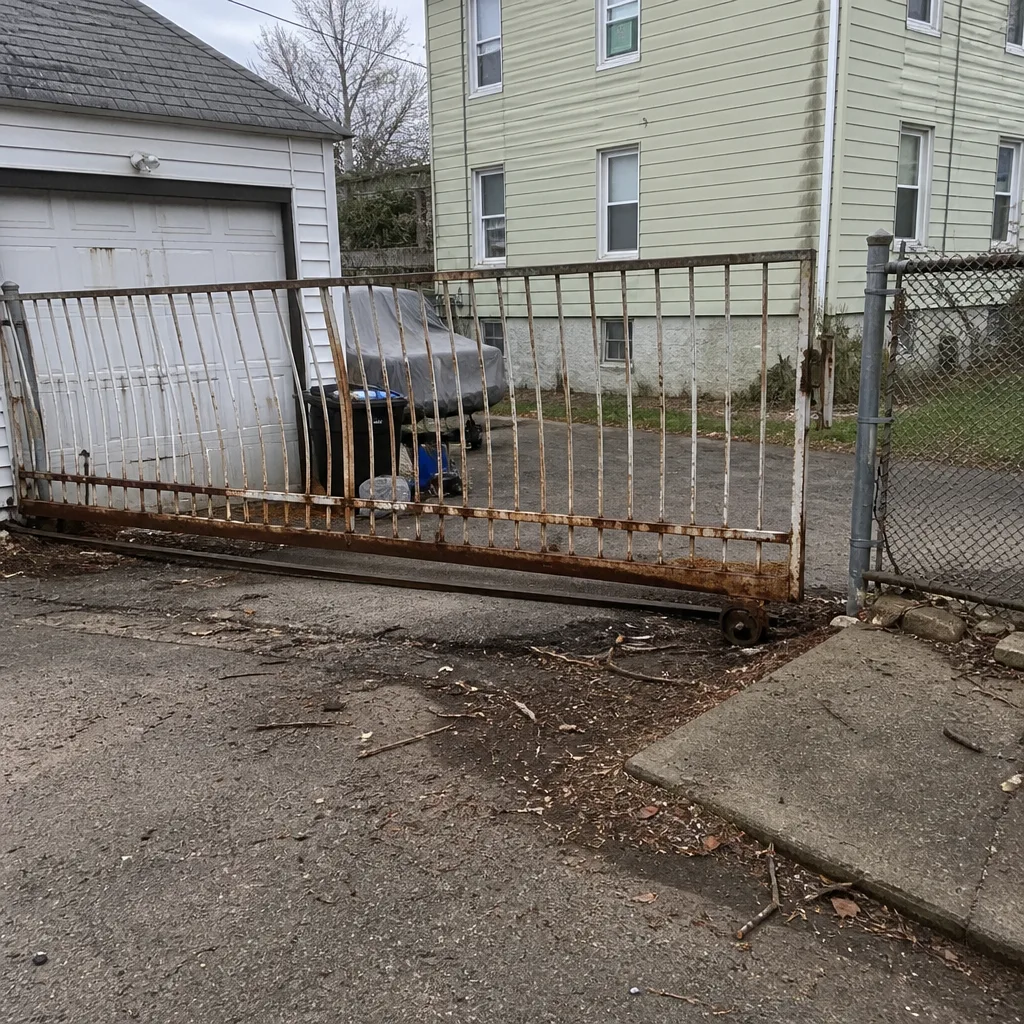 Before
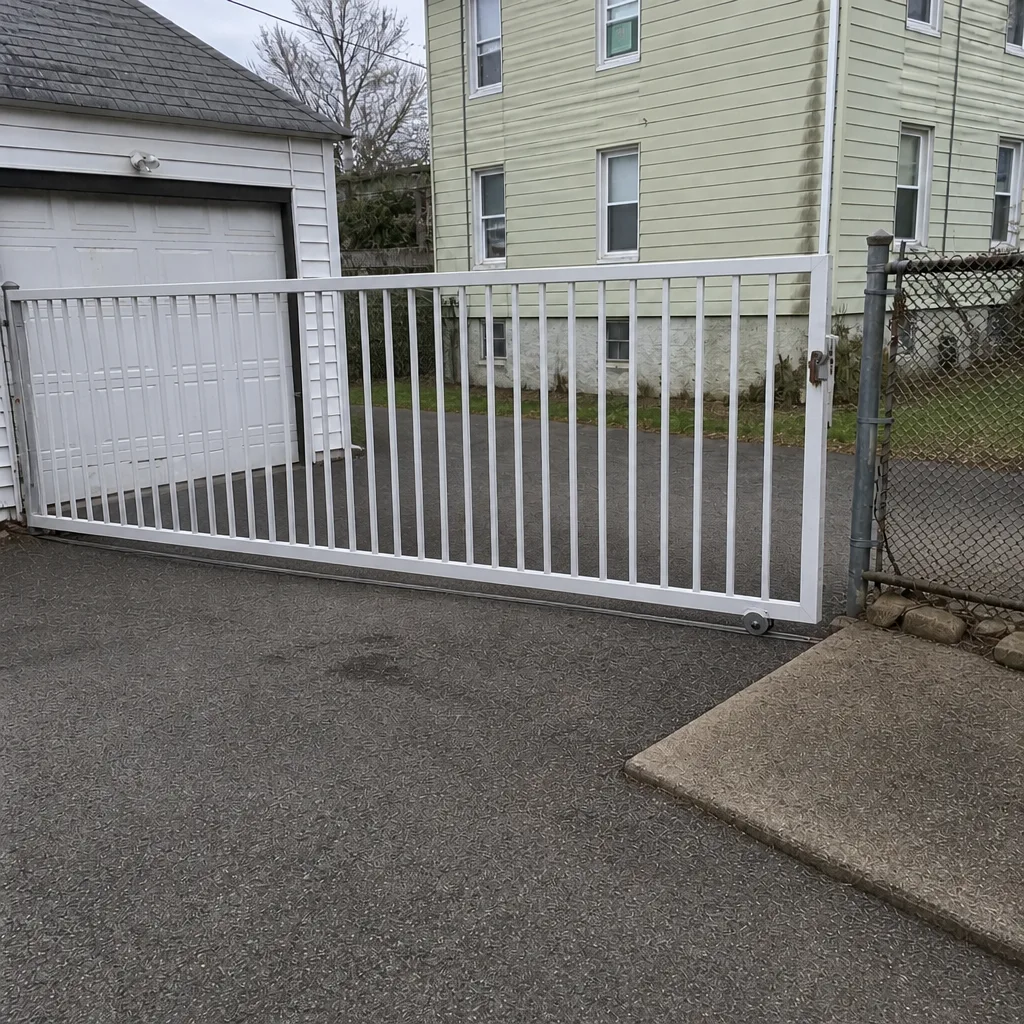 After
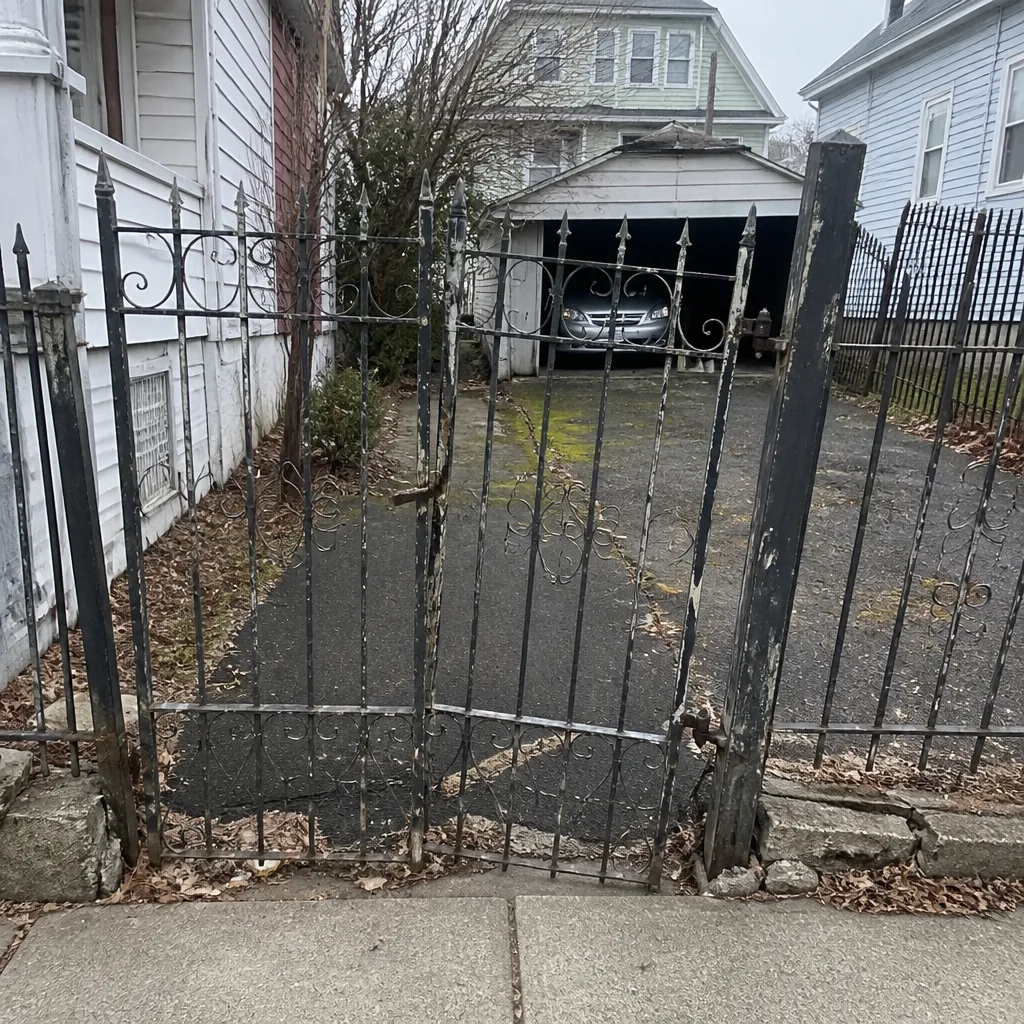 Before
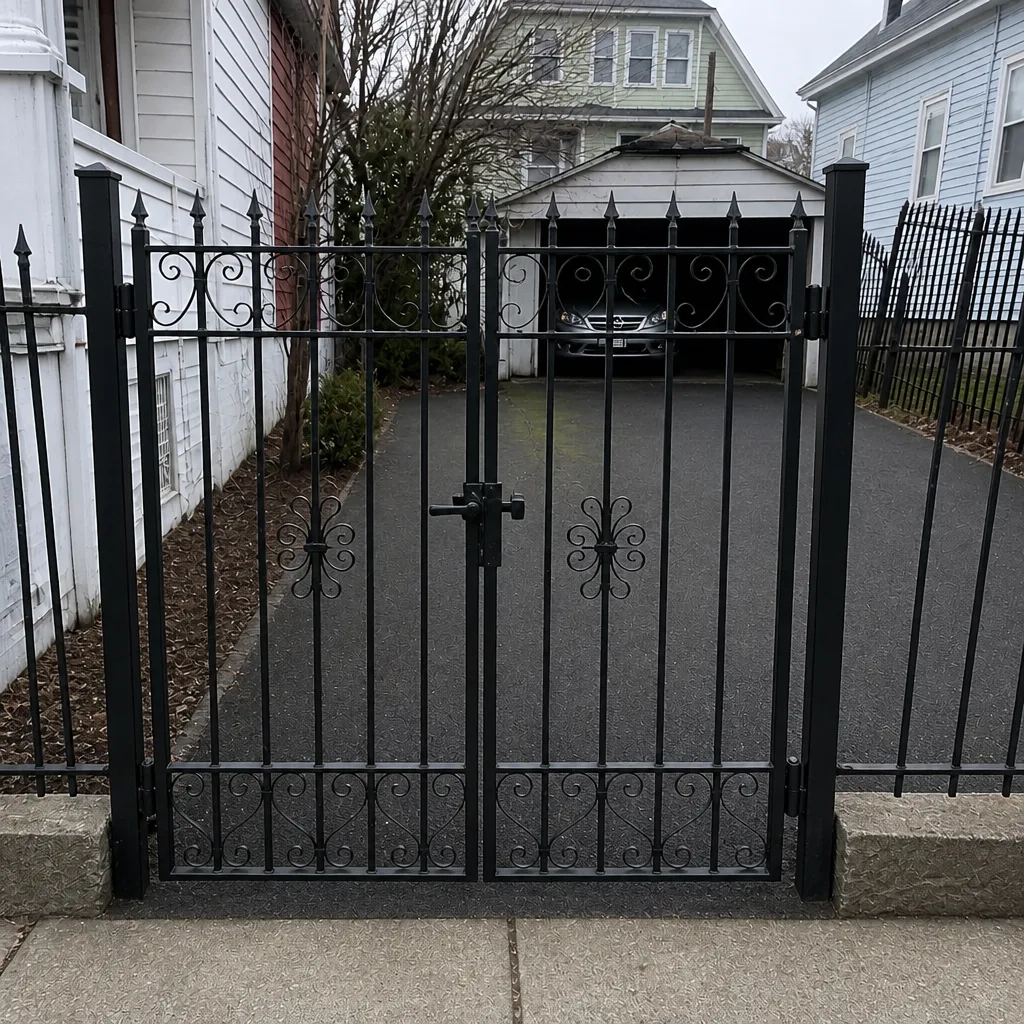 After
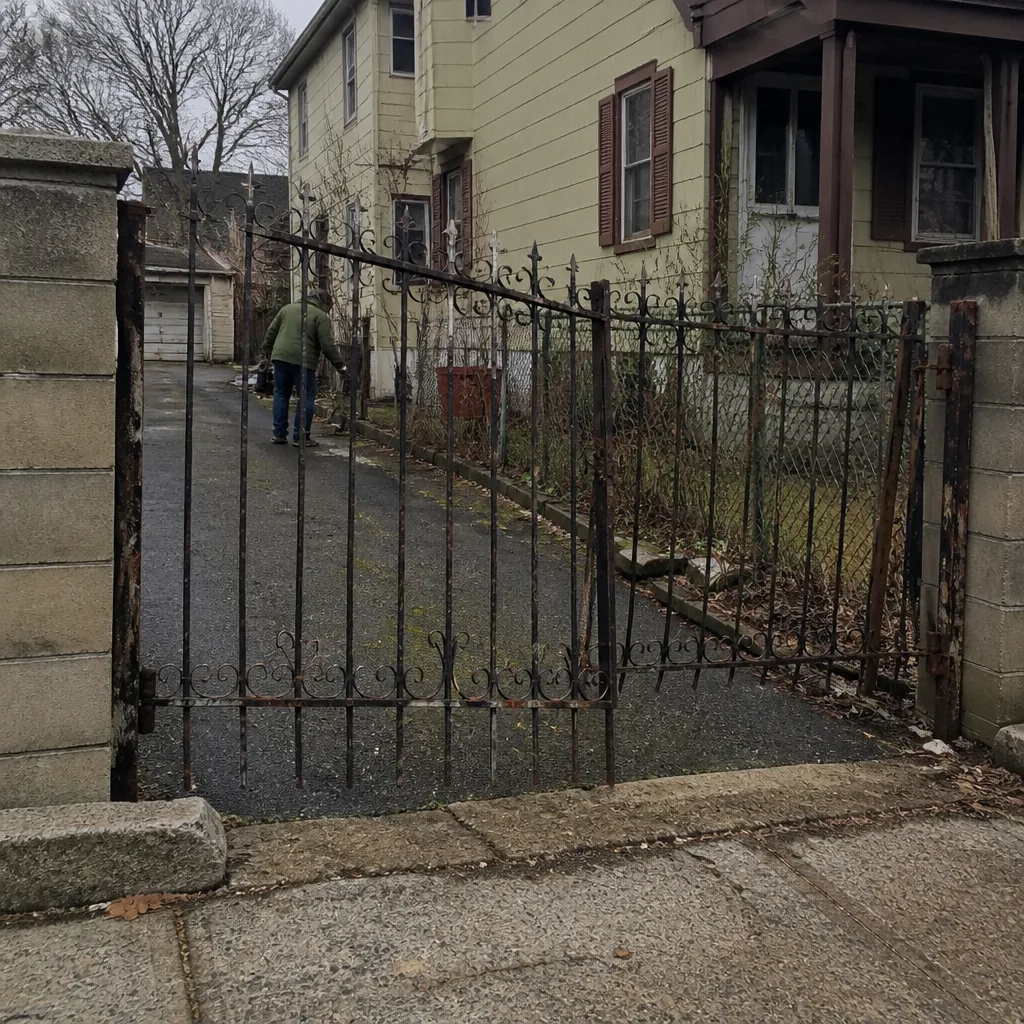 Before
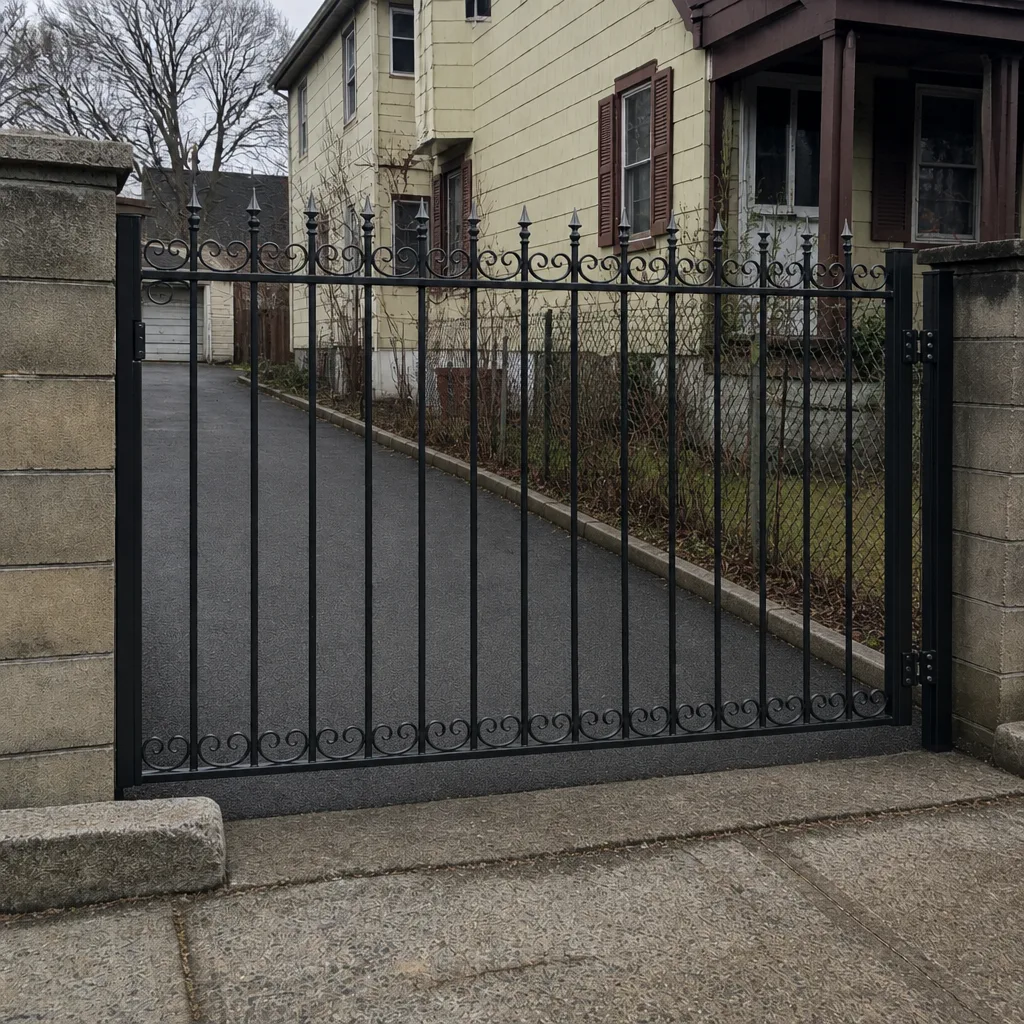 After
When to Call a Professional
Call a professional if your gate belongs to any of these categories: a gate that closes on people, a gate that reverses with nothing in its path, a gate with any safety sensor that is damaged or bypassed, a gate with a visibly leaning post or a growing crack at the footing, a gate that has bound up by hand, an operator throwing a repeating error code or tripping a thermal cutout multiple times a week, a slide gate that’s dropped off its track, and a gate showing any electrical symptom after a storm. A technically experienced gate specialist is the right call for all of these, and the wrong call for none of them. Gate Repair Paterson offers free estimates in Paterson. Call (833) 946-4320. We answer 24/7. Fast dispatch from 7am to 7pm, Sunday through Friday.
Frequently Asked Questions
The most common warning signs are a gate that reverses with nothing in its path, a gate that stops halfway through its cycle, repeating error codes on the operator, a thermal cutout that trips after a few cycles, a visually leaning post, and a sagging swing gate. Any one of them is worth an estimate. More than one at once usually means a gate that’s been failing slowly for a while. Call (833) 946-4320 for an exact quote, and the estimate is free.
Yes, if the gate is in the first tier of warning signs, manual mode is the correct state. A gate that closes on people, a gate with dead safety sensors, or a gate with a loosening post should not be run automatically until it’s been looked at. Leave it in manual, or secured, and get it assessed. The difference between a gate that needs a repair and one that needs a repair now is usually whether the safety systems still work.
Release the gate from the operator and move it by hand. If it moves freely, the operator is the likely fault. If it binds, drags, or takes real effort, the gate structure is the likely fault. When both symptoms happen at once, the gate binds and the motor strains, fix the gate first. Call (833) 946-4320 for a diagnostic visit; an exact quote follows the on-site assessment.
A thermal cutout means the motor got hotter than it should and shut itself down to protect the windings. The most common causes are a binding gate putting extra load on the motor, an under-sized operator, a failing motor winding, or a control board delivering wrong current. Thermal cutouts on LiftMaster, FAAC, BFT, and Linear operators are common because all four brands include the protection by design, and the protection is doing its job. Call (833) 946-4320 for an exact quote; a repeat thermal cutout is a repair-within-30-days problem, not a wait-and-see.
Most leaning gate posts can be repaired. Sometimes the post can be reset, re-footed, or re-anchored. Sometimes it needs to come out and go back in with a proper footing. The decision comes down to how much concrete movement the post has experienced, how heavy the gate attached to it is, and whether the post itself is bent. We assess all three before recommending. Call (833) 946-4320 to schedule an on-site estimate.
Replace an operator when it has failed in a way that makes repair unwise, usually a failed motor body, an obsolete board with no available replacement, or repeated failures in a short period. Repair is generally the better value for a single board or motor fault. Whether the operator needs a board swap or a full replacement, our electric gate repair service is our core work, not a side offering. Call (833) 946-4320 for a free estimate and a written price before any work starts.
The Bottom Line
Gate warning signs aren’t all the same urgency. Sort what you’re seeing into the three tiers: stop-now signs that mean the gate should come off automatic until it’s assessed, thirty-day signs that mean you have time but not much, and monitor signs that need notes and a scheduled check. Learn the operator-versus-structure test, because fixing the wrong one wastes money. Write down patterns; diagnostic notes are worth real money. And if a gate is closing on people or running with a dead safety sensor, treat it as the emergency it is. We work on gates in Paterson as a specialty, and gates are all we do. Electric gate repair and board-level diagnostics are the bulk of our work, and when a gate isn’t worth repairing, gate repair or replacement is a single call either way.
Contact Gate Repair Paterson
If anything in this guide describes your gate, call (833) 946-4320 for a free estimate. We answer 24/7. Fast dispatch from 7am to 7pm, Sunday through Friday. Whether your operator needs a board swap or a full replacement, whether the gate needs a hinge, a post, a sensor, or a slide track fix, we’ll diagnose the actual failure rather than guessing, give you a written price before any work starts, and get your gate moving again. Our technicians have up to 13 years of experience on the brand systems you own.
Written by the team at Gate Repair Paterson.