
Last updated November 15, 2026
 Wrought iron
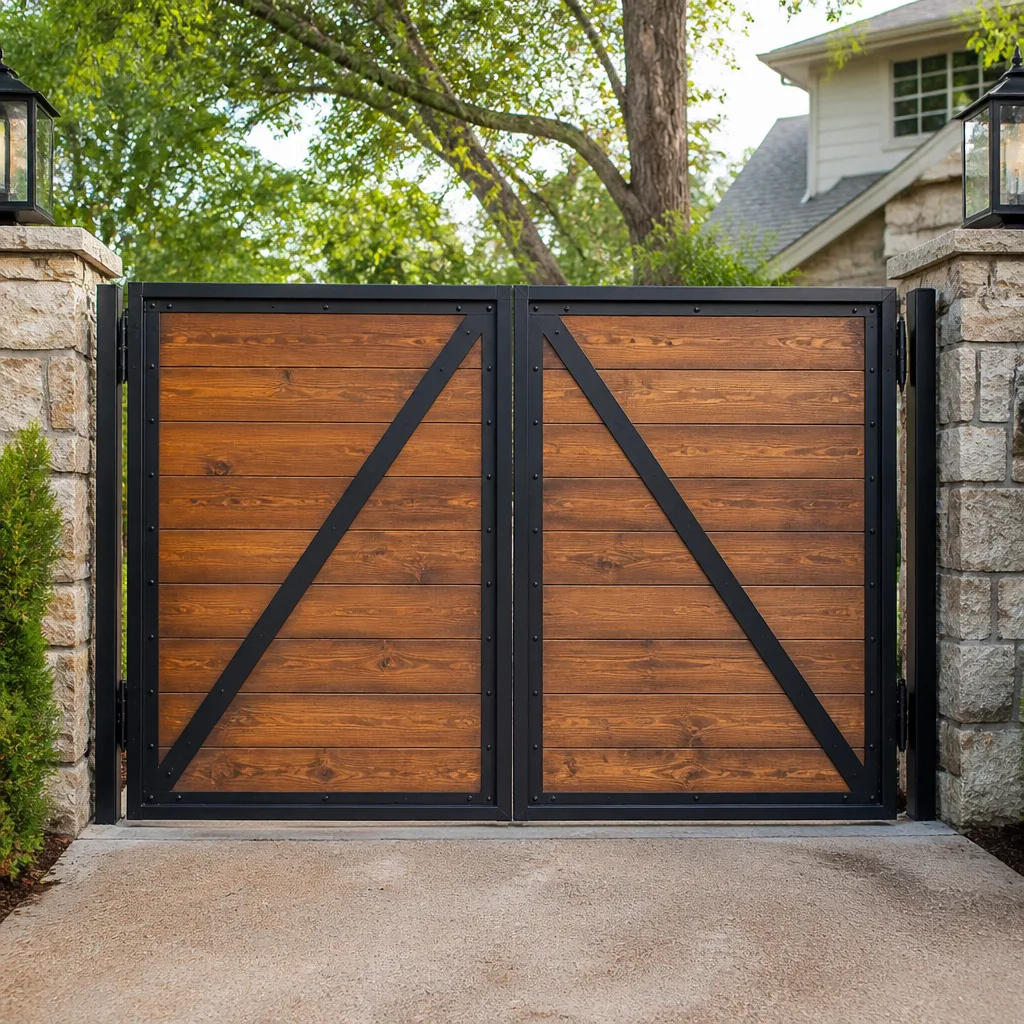 Wood & steel frame
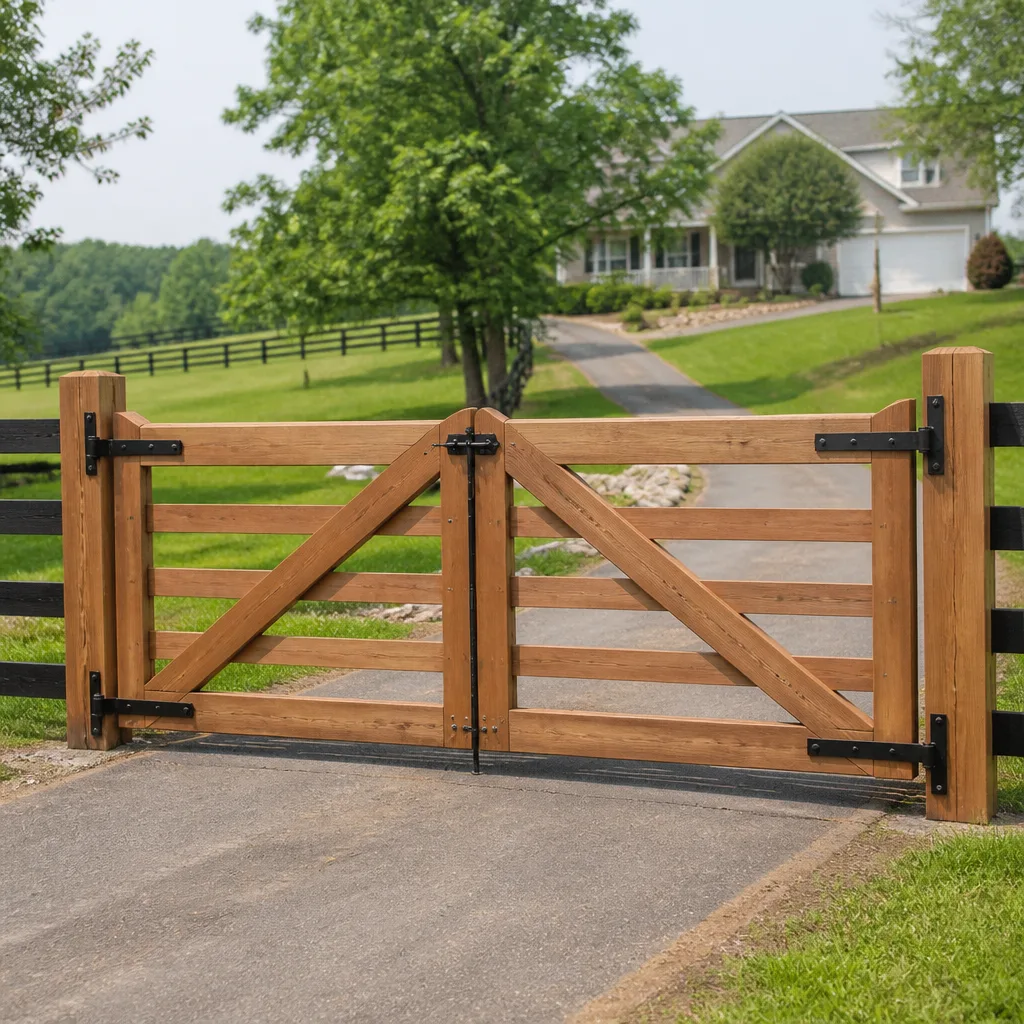 Farm & ranch
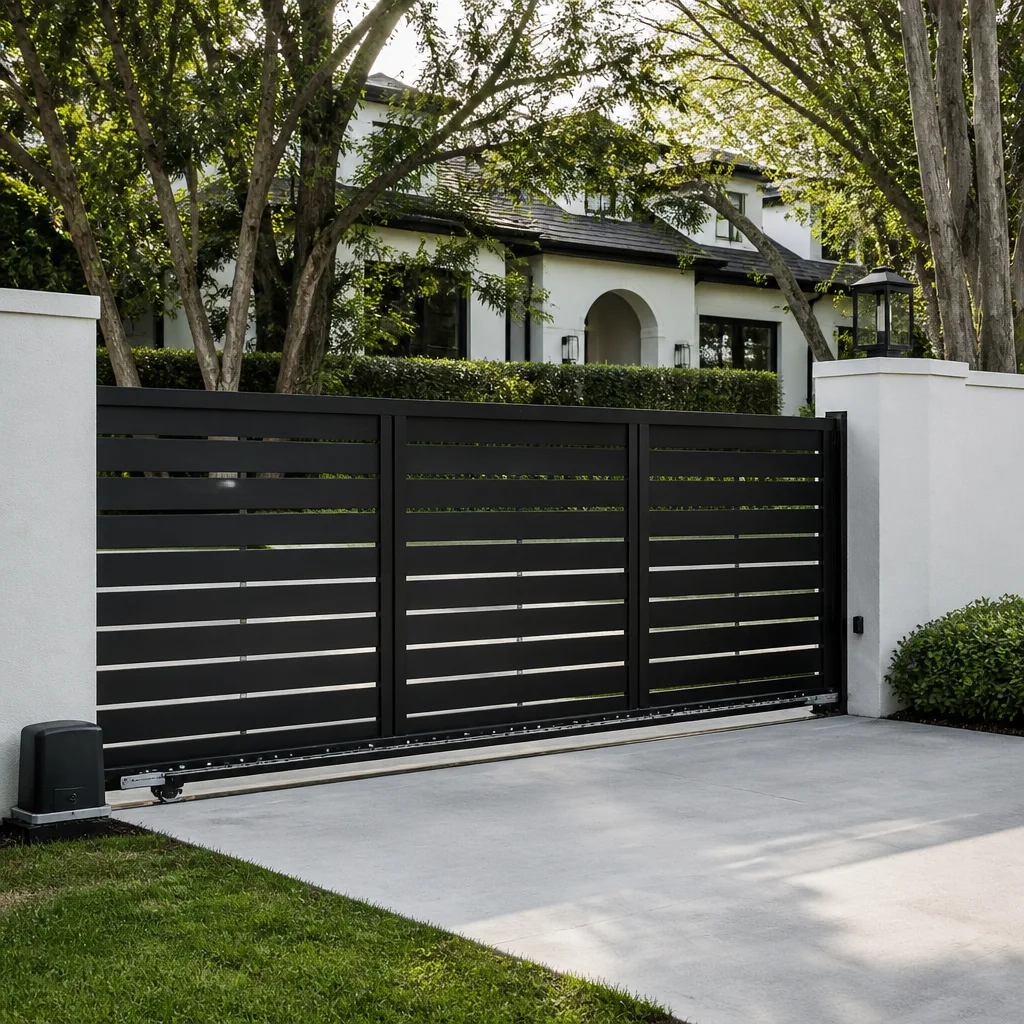 Sliding driveway gates
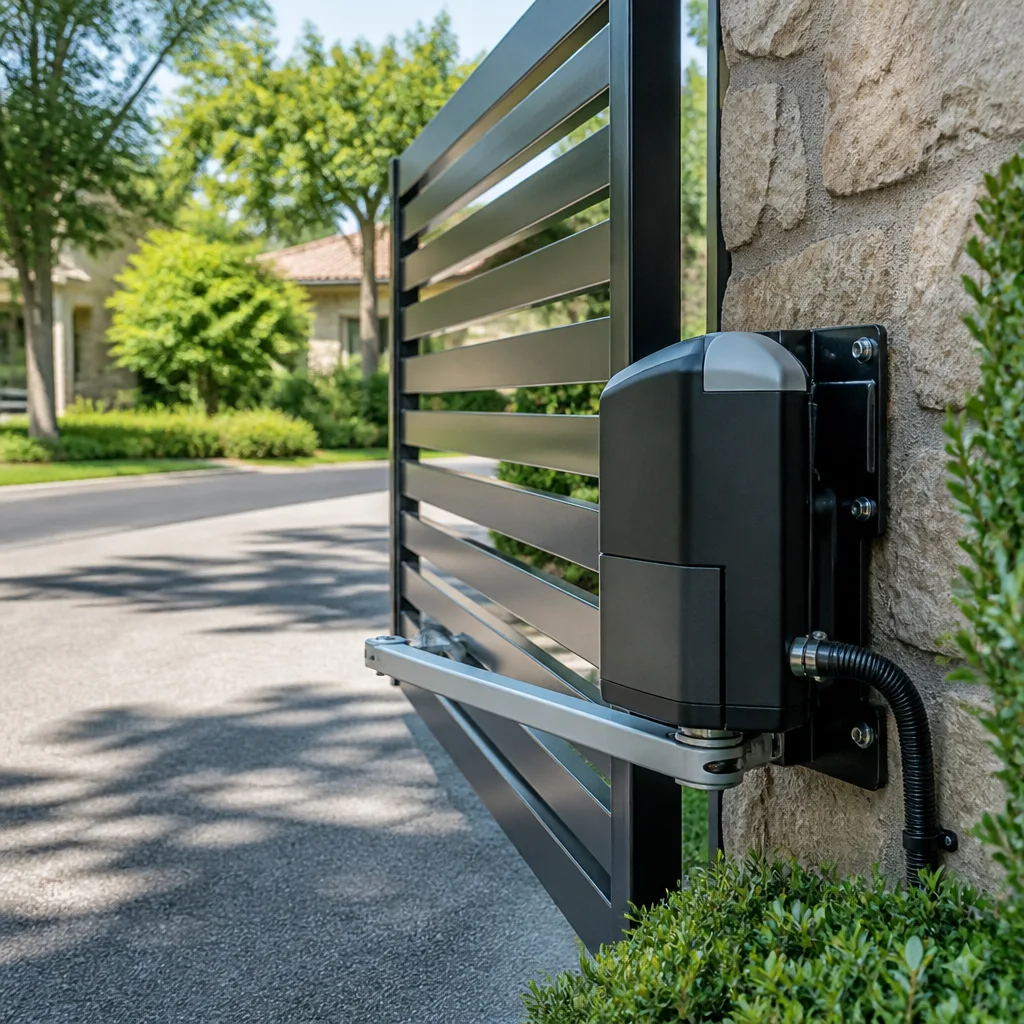 LiftMaster operators
Free on-site gate assessment - hinges, posts, and your LiftMaster or Nice gate operator checked before anything is quoted
The assessment is free and the quote is the invoice.
Get your free estimateGate Repair Maintenance Schedule: What to Do and When
Lubrication is the most over-performed and incorrectly executed maintenance task on gates. Most owners grease the places that look like they need it and skip the surfaces where failures actually begin. A residential swing gate that opens four times a day and a commercial slide gate that opens four hundred have almost nothing in common, and neither one follows a generic checklist. This guide breaks the work down by gate type and usage level: what to do weekly, what to check monthly, and what belongs on an annual electrical inspection. We’ll also cover the Paterson seasonal points most schedules ignore.
Quick Answer
A low-cycle residential gate needs lubrication and a hardware inspection every six months, plus a safety-device test every month. A high-cycle commercial gate needs lubrication monthly, a hardware and track inspection quarterly, and a full electrical check twice a year. Both need an annual safety-edge and loop detector test with documentation, and both need seasonal adjustment in Paterson’s climate.
Styles & brands we work with
- Wrought iron
- Wood & steel frame
- Farm & ranch
- Sliding driveway gates
- LiftMaster operators
Table of Contents
- Start With Usage, Not Gate Type
- Lubrication: The Points That Actually Matter
- The Residential Low-Cycle Schedule
- The Commercial High-Cycle Schedule
- Annual Electrical Checks in New Jersey’s Humidity
- Testing and Documenting Safety Edges and Loops
- Paterson Seasonal Prep: Before and After Winter
- Keeping a Log That’s Worth Something
Start With Usage, Not Gate Type
The first question in any maintenance schedule isn’t “swing or slide.” It’s how many cycles the gate runs in a day. A cycle is one complete open and close movement. Everything else follows from that number, because the wear on hinges, tracks, rollers, and operator gears scales directly with cycles, not with the size of the gate or the brand on the control board.
We separate gates into three usage tiers:
- Low-cycle residential: under 10 cycles per day. A driveway gate at a house, opened for the school run and again in the evening.
- Moderate: 10 to 50 cycles per day. Small apartment properties, shared driveways, a few tenants coming and going.
- High-cycle commercial: 50 cycles per day and up. Parking facility entrances and apartment complexes where the operator runs almost constantly during peak hours.
Here’s why the tier matters more than the gate itself. A residential swing gate can sit for years with a hinge noise that never develops into anything, because it’s not moving often enough for the wear to accelerate. A high-cycle commercial slide gate running the same hardware will destroy that hinge pin within a season. We’ve seen this pattern on many gate repair calls in Paterson: the same failure mode, but the high-cycle gate shows it at a fraction of the age.
The operator manufacturer’s duty rating matches this. Operators are rated for a cycle count over a period, and running a residential-rated operator on a commercial gate is a straight path to premature motor and control board failure. If you don’t know your operator’s rating, look at the rating plate on the housing or call us with the brand and model. We work on systems from Ghost Controls, DoorKing, Elite, and Mighty Mule, among others, and each has its own duty specs.
The rest of this guide uses those two main tiers: low-cycle residential and high-cycle commercial, with moderate usage splitting the difference. Find your tier, then use the schedule that matches.
Lubrication: The Points That Actually Matter
Most gate failures that start as “it’s getting sticky” trace back to a handful of surfaces, and which surfaces depends on the gate’s drive type. Greasing the wrong parts doesn’t just waste time; it can attract grit and actually accelerate wear on some components. Here’s the breakdown by gate type.
Rack-and-pinion slide gates
The rack-and-pinion system is the metal gear rack bolted to the gate and the pinion gear on the operator. The critical surfaces:
- The rack teeth. Apply a light coat of a dry or semi-dry lubricant to the tooth faces. Heavy grease collects dust and grit, which grinds the teeth down faster than leaving them dry.
- The pinion gear on the operator. Lubricate lightly and check for proper mesh. Too tight and the teeth wear hot; too loose and the rack skips.
- The gate track or guide rollers. These sit at the base of the gate and carry the weight. Clean them, then lubricate the roller bearings, not the roller surface itself. A greasy roller surface is a slipping hazard and a grit magnet.
- The top guide. If the gate has an upper guide roller, keep it clean and check for binding. Binding here pushes the gate sideways and damages the rack.
Hinge-pin swing gates
Hinge pins are the most important points on a swing gate, and they’re the ones most owners over-grease the least useful parts of. The critical surfaces:
- The hinge pin itself, at the joint. Apply a penetrating lubricant or light oil directly at the pin-to-bracket interface. This is the surface that seizes and causes the gate to sag or bind.
- The gate’s operator arm or chain, if automated. Check the manufacturer spec for the operator’s recommended lubricant; some swing operators are designed to run dry.
- The latch and latch-post surfaces. A dry latch grips and doesn’t release cleanly, which strains the operator on every cycle.
Do not grease the gate’s pivot bracket mounting bolts or the gate frame itself. Those don’t need it, and the grease just traps grit.
Underground operators
Underground operators are the ones most owners don’t know how to maintain, mostly because the hardware is buried. The critical surfaces are internal, so the maintenance is inspection and fluid-fluid check, not grease application. Check the operator’s fluid level at the inspection intervals, look for leaks at the pit cover, and confirm the pit drains properly. Water in the pit is the number-one cause of underground operator failure we see in Paterson.
The Residential Low-Cycle Schedule
A residential gate that opens fewer than 10 times a day is forgiving. The schedule reflects that: less frequent intervention, more attention to the things that degrade from sitting rather than from cycling. In our experience, the low-cycle failures are almost always hinge or track degradation from ground movement and weather, not from metal-on-metal wear.
Every 6 months
- Lubricate according to the gate type. Use the lubrication points above. On a swing gate, hinge pins and latch. On a slide gate, rack teeth and roller bearings.
- Check all fasteners and pins. Hinge pin caps, bracket bolts, track mounting bolts. Tighten anything loose; look for missing pins.
- Check the gate level and swing. Open the gate halfway and let it rest. If it drifts or needs a push to close, the hinges or gate post need attention.
- Inspect the track on a slide gate. Clear leaves, dirt, and small debris from the track and the guide rollers.
- Wipe down and inspect the operator housing. Look for cracks, gaps, and moisture intrusion on the control board area.
- Test the safety devices. Manual or automated, the gate should stop or reverse when the safety edge contacts an obstruction. Do this test every cycle of this schedule.
Every month
- Clear the gate’s travel path. Debris, snow melt runoff, and leaves near the gate’s swing or slide.
- Test the manual release. On an automated gate, confirm the manual release works and that everyone in the household knows how to use it.
- Listen for changes. A new squeak, a slower open, a chattering close. Note the change so you can describe it accurately to a technician.
Every 12 months
- Full electrical inspection if the gate is automated, covered below.
- Seasonal adjustment for Paterson’s climate, also below.
- Operator programming check. Confirm the limit switches, slowdown zones, and safety reversals are set correctly. Operators from Elite and Ghost Controls, for instance, have specific programming paths for these; we know each one and can verify the settings quickly.
The Commercial High-Cycle Schedule
A commercial gate running 50-plus cycles per day compresses years of residential wear into months. At this tier, the schedule tightens to catch failures before they take the gate out of service. The biggest mistake we see with high-cycle gates in Paterson is treating them like a residential gate because they look the same. The operator duty rating and the maintenance frequency have to reflect the actual cycle count.
Every week
- Visual walk of the gate’s full travel path. Look for obstructions, misalignment, and any new noise.
- Test the safety devices. Safety edges and loops every week on a high-cycle gate.
- Check the track on a slide gate. Clear debris and confirm the gate runs cleanly.
Every month
- Full lubrication per the gate type, same surfaces as the residential schedule.
- Check track alignment and rack mesh. Confirm the pinion gear isn’t running tight or loose.
- Check roller and guide wear. A worn roller starts dragging and the operator works harder; replace it before it damages the rack.
- Inspect the operator housing and control board area. Look for moisture, insects, and heat damage.
- Review the operator’s fault codes and cycle count. Many operators log these. The log is your early warning system.
Every 3 months
- Full hardware torque check. Every bracket, bolt, and hinge pin on the gate and operator.
- Operator gear and chain inspection. Check chain tension, gear wear, and, on a chain-driven operator, lubrication per the manufacturer spec.
- Test manual operation and manual release. Confirm the gate can be moved and locked out safely when service is needed.
Every 6 months
- Full electrical inspection as below. On a high-cycle gate, we recommend this twice a year, not once.
- Safety-device calibration check. Not just the test; confirm the edges, loops, and photoelectric sensors are calibrated to spec, not just working.
Annual Electrical Checks in New Jersey’s Humidity
A gate’s electrical system is the part most owners can’t inspect themselves, and it’s the part that fails most often in our region’s humidity. New Jersey summers carry enough moisture to corrode terminals, and the temperature swings between seasons stress seals and weatherproofing. These are the checks that catch the failures before they take out a control board or a whole operator.
Terminal and connector corrosion
Every wiring terminal, every connector in the operator housing, and every junction point at the gate post gets inspected. In our experience, a lightly corroded terminal passes a quick glance and fails during a wet week. The inspection looks for green film on the copper or aluminum, white powdery corrosion on the connector’s contact surfaces, and any sign of heat stress on the terminal itself.
Ground fault detection
We check the ground fault path and the equipment grounding conductor at the operator and the control board. A gate with a poor ground path is a shock hazard and behaves erratically in wet weather. This check matters regardless of brand; the ground path is standard across systems, from DoorKing commercial operators to Mighty Mule residential units.
Weatherproofing integrity
Gaskets around the housing cover, cable entry fittings, and any conduit connections. A crack in the housing gasket is a slow-motion flooding of the control board. In Paterson’s humidity, that crack is a path for condensation that never fully dries out.
Wiring and control board inspection
Look for nicked insulation, tight wire runs, and signs of rodent damage. Check the control board for swollen capacitors, burnt traces, and moisture damage. Operators with a “learning” board, common on many systems, often show mild confusion and intermittent errors before they outright fail.
Power and surge protection
Confirm the supply voltage is within the operator’s spec. A voltage sag on the circuit can cause the operator to draw more current than designed and overheat. If the gate is on a shared circuit, this check is worth doing every time.
If any of these checks come back with a question, it’s worth getting a trained eye on it. electric gate repair work is a core service for us; we’ll trace the fault, not just swap a board and hope.
Testing and Documenting Safety Edges and Loops
This is the maintenance step most schedules skip and most property owners don’t know how to do. The safety devices are the only thing standing between a normal cycle and an injury or property damage. Testing them isn’t optional, and documenting the test is how you show you’re maintaining the gate responsibly.
Safety edge test
- Watch the gate through a full close cycle. Confirm nothing obstructs the travel path.
- While the gate is closing, apply light pressure to the safety edge. The gate should reverse immediately.
- Repeat at the operator’s slowdown zone (typically the last few feet of the closing cycle). The edge should work in the slowed zone as well as at full speed.
- Confirm the reversal is clean. The gate should open fully and reset. A half-reversal or a stuck state is a fault.
Loop detector test
Loop detectors are the magnetic sensors embedded in the drive surface. Test them by driving a vehicle (or, for a pedestrian loop, a piece of metal) into the loop’s detection zone at the moments the operator is watching:
- Test the vehicle loop before and during a close cycle. The loop should hold the gate open or reverse it.
- Test the pedestrian loop if present. Same sequence.
- Confirm the operator’s fault light is off after each test. A loop that detects intermittently is a liability, not a convenience.
Photoelectric and gate-stop tests
If your gate has photoelectric sensors across the opening, break the beam while the gate is closing and confirm it reverses. Check any physical gate-stop or obstruction sensor the same way.
Documenting the test
Log the test date, the tests done, and the result. A simple paper log or a digital note is enough. The document matters because it proves the schedule is being followed and because it gives a technician a history if something fails later. We recommend a log entry for every monthly test on a high-cycle gate and every six-month test on a residential one.
If a safety device isn’t testing correctly, that’s not a “next month” problem. Gate Repair Paterson treats it as a fault and gets it corrected before the gate goes back into normal use. Call (833) 946-4320 and we’ll get a trained technician out to diagnose.
Paterson Seasonal Prep: Before and After Winter
Paterson’s climate asks specific things of a gate’s maintenance schedule. Cold winters, humid summers, and ground movement from season to season all show up as problems on gates that get no seasonal attention. These are the checks most worth doing, timed to the seasons.
Before winter
- Hydraulic fluid viscosity check on an underground operator. Cold weather changes hydraulic performance. If the operator’s fluid is at spec and the viscosity is right for the coming cold, the gate runs cleanly. If not, the operator strains on cold mornings and that strain shortens the motor’s life.
- Check the gate’s grounding path and the operator’s weatherproofing. Winter means wet and freezing; those conditions exploit a weak ground path faster than summer does.
- Check the gate’s hinges and the swing path for the freeze-thaw cycle. Any binding or sag is worse in the cold. Fix it before the ground freezes.
- Inspect the operator’s control board area for moisture intrusion, and reseal any gasket that’s compromised.
After winter
- Hinge realignment check. The freeze-thaw cycle moves the soil under the gate posts, and it shifts swing gate hinges out of alignment. Check the gate’s swing path and re-align the hinges or adjust the post brackets to spec.
- Post depth and stability check. If the gate or post has moved, the gate has a footing problem to solve. Ask a technician to check the post footing depth if the gate has shifted significantly.
- Clear and inspect the track and the rollers on a slide gate. Winter debris and the run-off of salt and grit from the drive surface collect at the gate, which matters for any gate near a road or driveway the property treats with salt. The gate itself needs a good cleaning and a light re-lube at the track.
- Test the safety devices again. A winter of non-use hides failures. Test everything before the gate goes back into a full season of cycling.
Keeping a Log That’s Worth Something
A maintenance log has value only if it’s specific. “Gate serviced” tells you nothing next year. “Lubricated the rack and pinion and the guide rollers; replaced the left hinge pin; tested the safety edge at full speed and in the slow zone; passed” tells a technician exactly where the gate stands. For gates in Paterson, we recommend a simple written or digital log kept at the operator or in a property file.
What to log:
- Date of each service and the tier it’s on (residential or commercial).
- What was lubed, and on which gate type (swing, slide, or underground operator).
- Parts replaced, with the part and the reason.
- Safety-device test results and the specific tests done.
- Any change in noise, speed, or behavior since the last service.
- Operator fault codes if the control board logged any.
A log with a full year of entries is worth far more than memory. If something fails, the log shows the failure’s onset and gives a technician a fast starting point. Gates are all we do, so when we open a log alongside a malfunctioning gate, the history does most of the diagnosis for us. That’s the payoff: documented maintenance turns each service into a shorter, cheaper call, not a guessing game.
Common Mistakes to Avoid
- Greasing the wrong points. Heavy grease on a rack-and-pinion or a roller surface collects grit and grinds the metal down. The correct points are the hinge pins, the rack teeth (lightly), and the roller bearings, not the roller surfaces themselves.
- Treating a commercial gate like a residential one. The same gate hardware running 50 cycles a day needs the monthly and quarterly schedule, not the six-month one. A residential schedule on a commercial gate is the most common cause of premature operator failure in Paterson.
- Skipping safety-device tests. The test takes minutes; the failure it prevents is serious. Test the safety edges and loops on every cycle of your schedule, and log the results.
- Ignoring a slow or noisy gate. A new squeak or a slower close is the cheapest repair you’ll ever make, if you catch it early. Ignore it and the same fault becomes an operator, control board, or motor job.
- Overlooking seasonal ground movement. The freeze-thaw cycle moves gate posts and hinges. Check the swing path after winter, not after the gate stops closing.
- Leaving the pit full of water. For an underground operator, standing water in the pit is a slow death for the motor and the wiring. Check the pit drain on every seasonal inspection.
- A log that says nothing. “Serviced” doesn’t document the state of the gate. Log what was done, what was replaced, and what changed.
See the difference
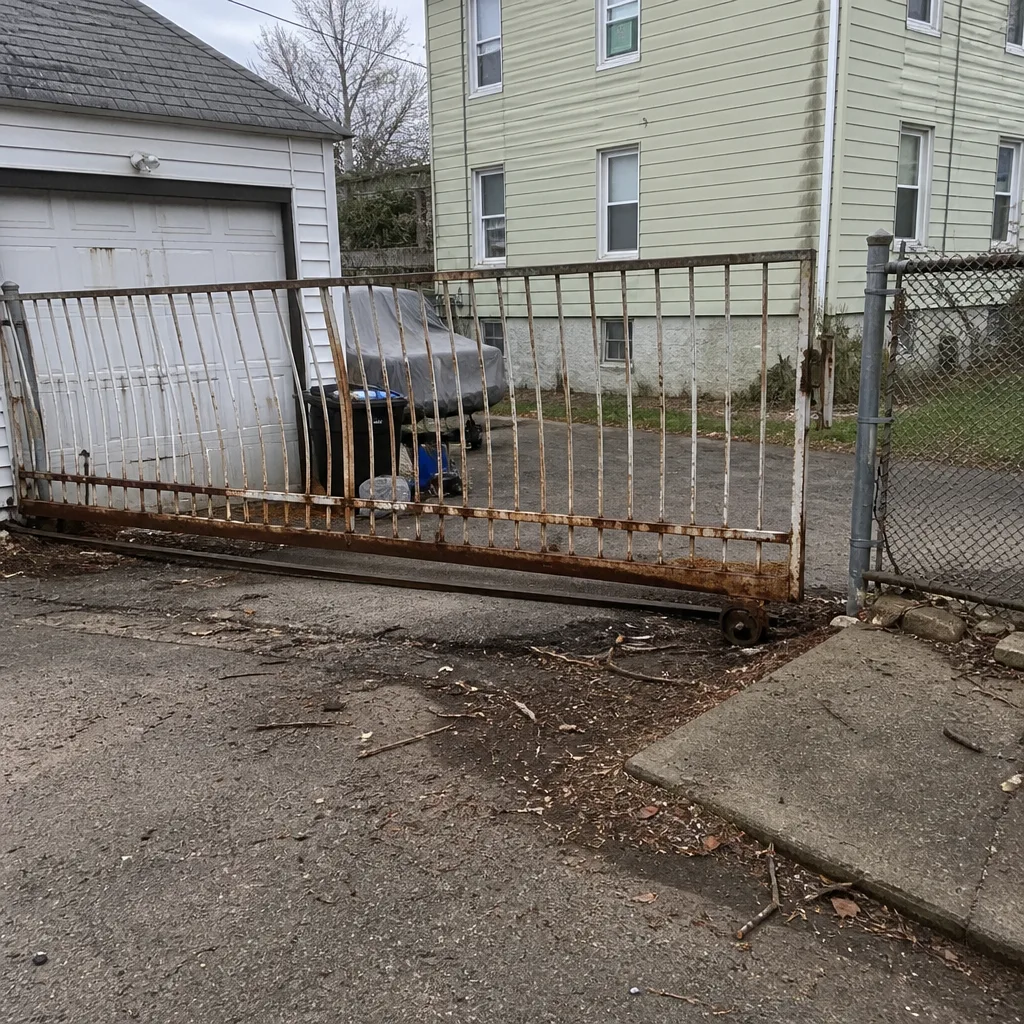 Before
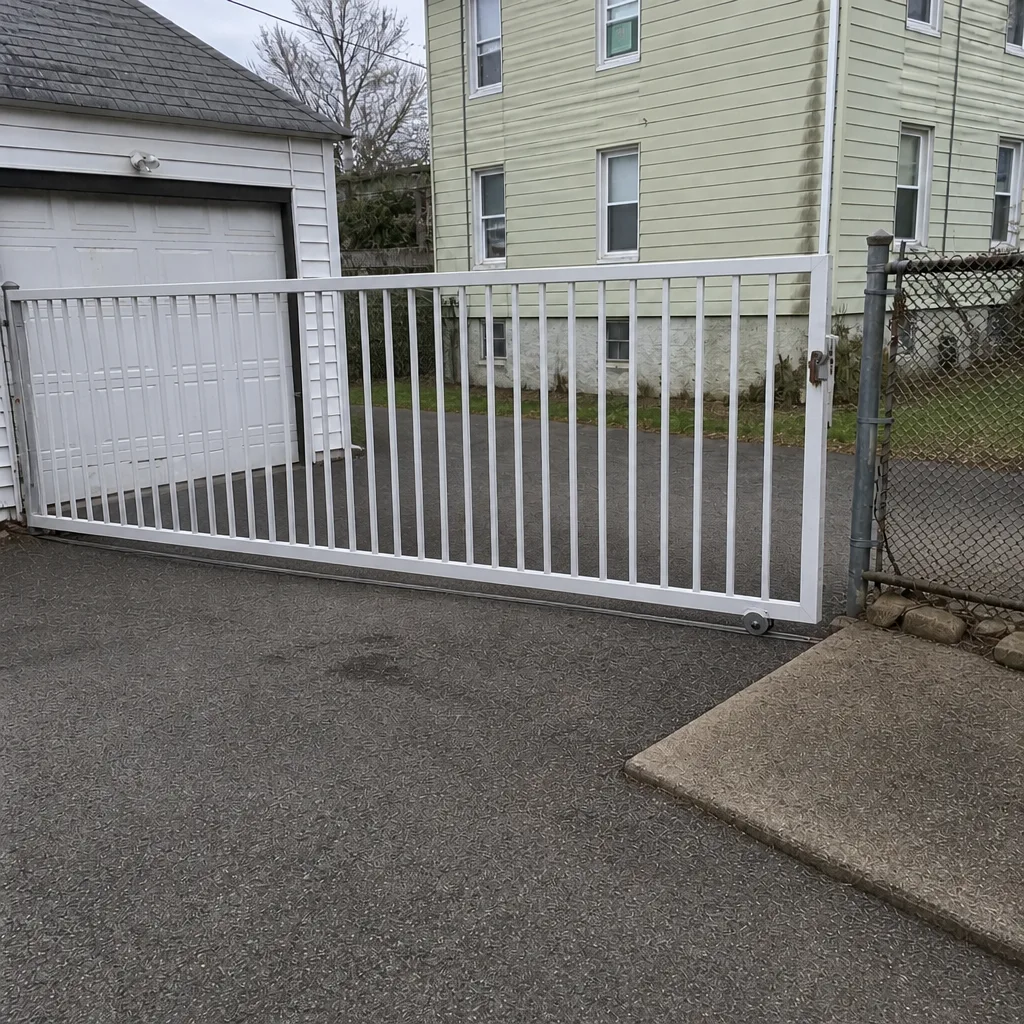 After
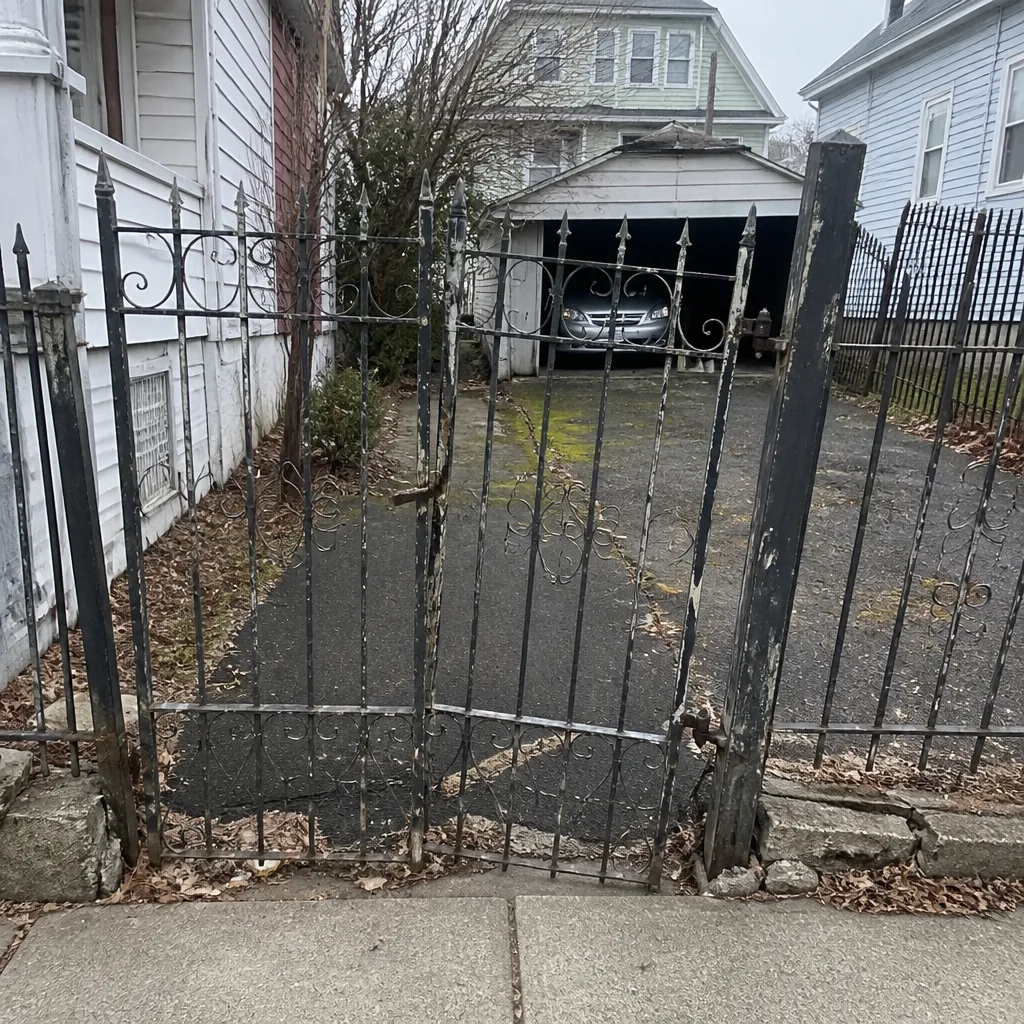 Before
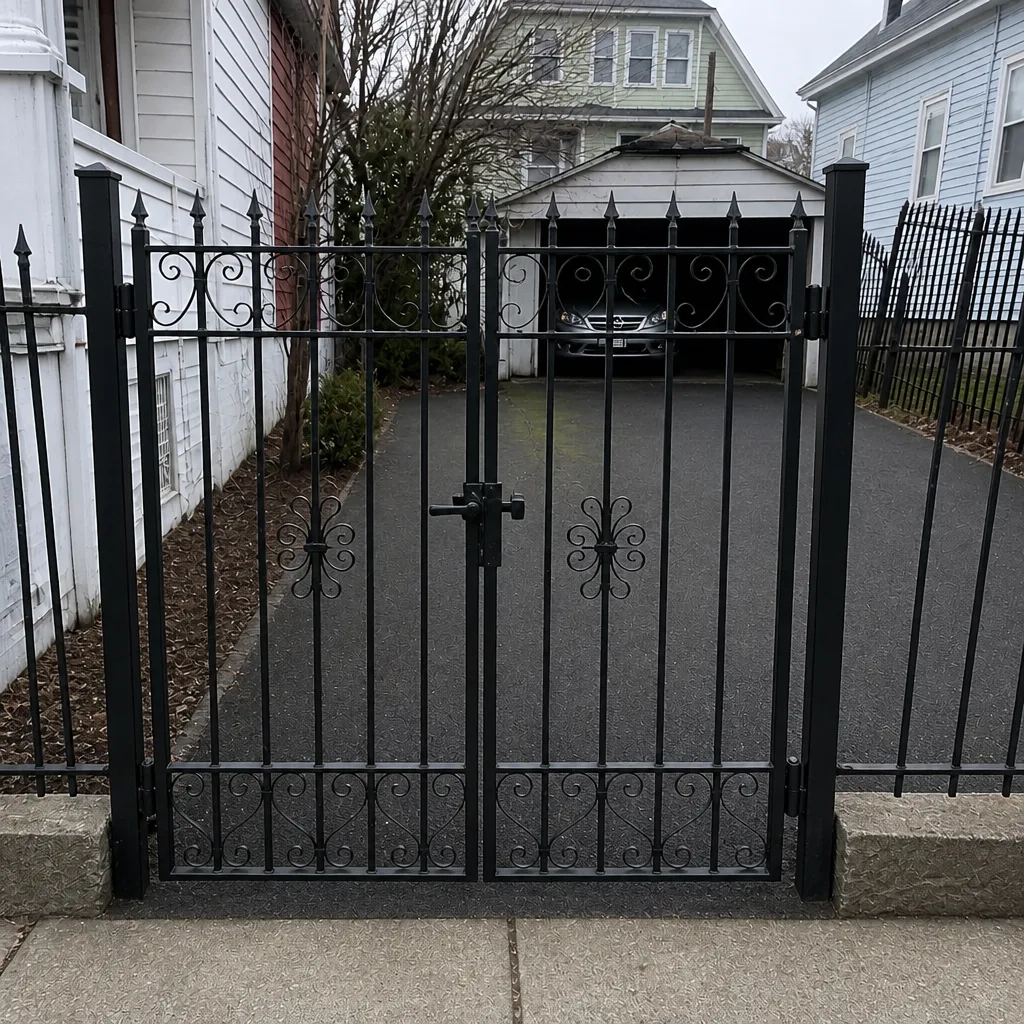 After
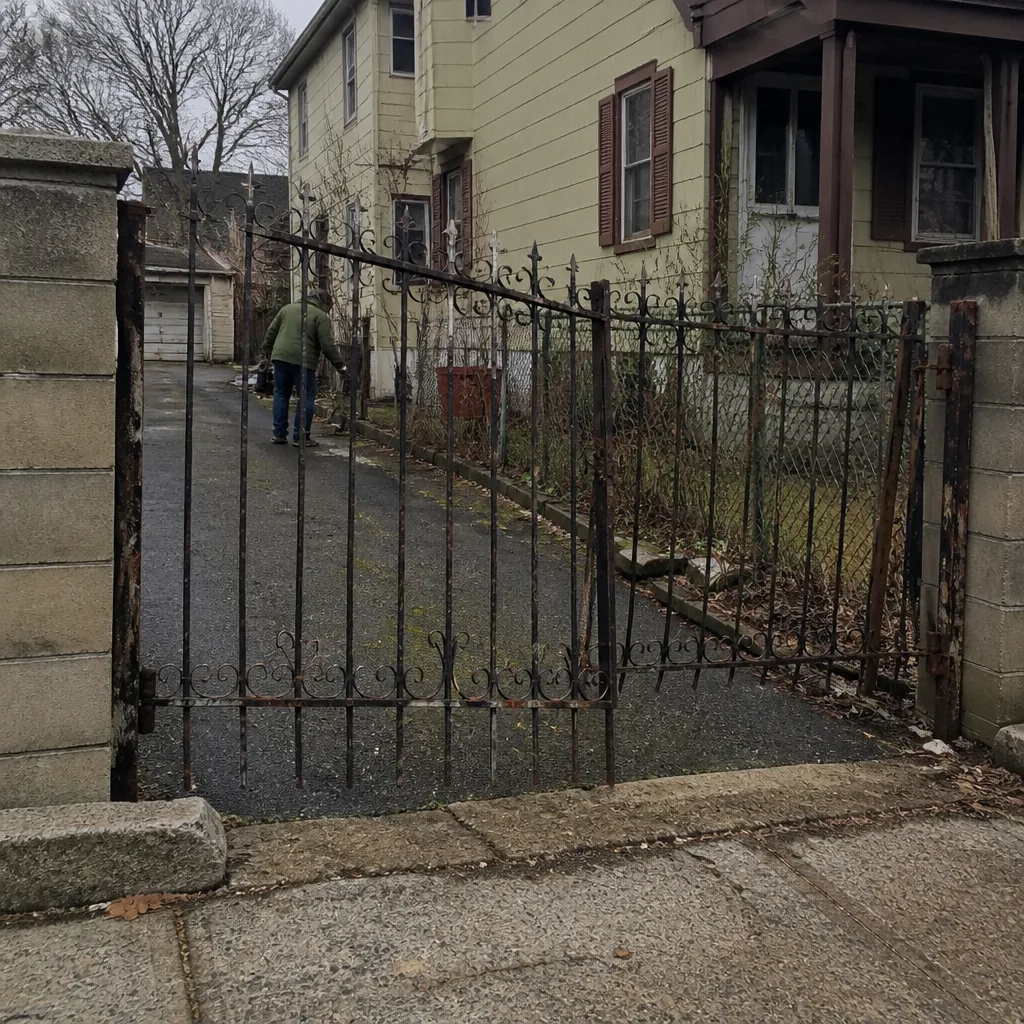 Before
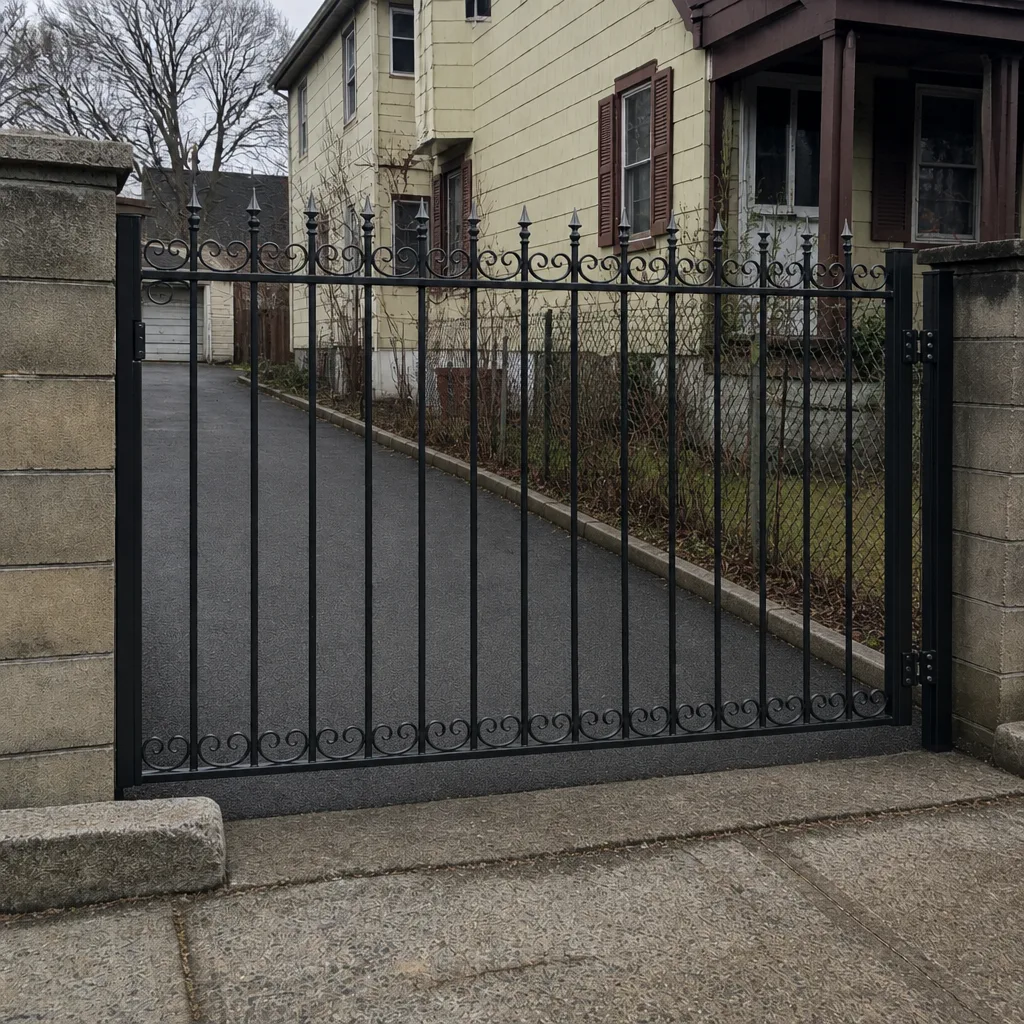 After
When to Call a Professional
Some maintenance is worth doing yourself: lubrication, cleaning the track, clearing debris, and a visual walk of the gate. But some work requires a trained technician and a proper diagnosis, and that line is worth respecting.
Call a technician when:
- The gate has stopped opening or closing, or moves partly and stops. This is almost always an electrical or operator fault, not a mechanical one.
- A safety edge or loop detector isn’t reversing the gate on test. Safety devices that fail or reverse intermittently should be diagnosed immediately.
- The operator’s control board shows fault codes, burn marks, or moisture damage.
- A hinge, track, or gate post has moved or failed, and the gate no longer aligns.
- An underground operator has standing water in its pit or has been slowly losing hydraulic performance.
Gate repair Paterson offers free estimates in Paterson. Call (833) 946-4320. We work on gate systems from Ghost Controls, DoorKing, Elite, and Mighty Mule, among others, and we know each system’s known failure points and programming, so we diagnose the right part rather than guess.
Frequently Asked Questions
A residential low-cycle gate (under 10 cycles per day) should be lubricated and inspected every six months, with a monthly safety-device test and an annual full electrical check if it’s automated. The six-month intervals match the gate’s wear rate: low cycling gives you time between services, but ground movement and weather don’t pause, so the inspection still matters.
The frequency, not the tasks. A commercial high-cycle gate (50-plus cycles per day) needs lubrication monthly, hardware and track inspection quarterly, and electrical checks every six months. A residential gate needs the same tasks at roughly half the frequency. Applying the residential schedule to a commercial gate is a common cause of premature operator failure.
While the gate is closing, apply light pressure to the safety edge and confirm the gate reverses. Repeat the test in the operator’s slowdown zone near the end of the close, and confirm the gate reverses cleanly and resets. Test your safety edge on every cycle of your schedule and log the result.
Yes, for the electrical check itself. The terminal corrosion inspection, ground fault check, weatherproofing integrity check, and control board inspection involve live wiring inside the operator, and a mistake can cause a shock or take out the board. The checks are part of a trained technician’s job; a homeowner should know how to observe the gate and where the manual release is, not how to open the housing.
Hinge alignment after the freeze-thaw cycle moved the gate posts, the post footing stability, the track and roller condition, and the safety devices after a winter of non-use. The freeze-thaw movement is the one most people miss; check the gate’s swing path after winter and re-align any hinge that’s out of position.
Check the operator’s rating plate for its duty rating and cycle count, then compare that to how often the gate actually cycles. If the operator is rated for less than the gate is doing, plan for a higher-rated replacement before the motor and board fail. Call (833) 946-4320 with the brand and model and we can tell you the rating and the maintenance schedule that matches, whether it’s a DoorKing, Mighty Mule, or any other system.
The Bottom Line
Gate maintenance isn’t a single schedule; it’s two schedules, chosen by usage tier. Find your cyc le count first: a low-cycle residential gate needs the six-month schedule with monthly safety tests, and a high-cycle commercial gate needs the monthly and quarterly schedule with bi-annual electrical checks. Lubricate the right points for your gate type, not the ones that look the most needy. Test and log your safety devices every cycle. And build the two seasonal checks, the pre-winter hydraulic fluid check and the post-winter hinge realignment, into your Paterson calendar. The payoff is simple: fewer operator replacements and fewer surprise breakdowns.
If you’ve run through the schedule and something’s still off, call Gate Repair Paterson at (833) 946-4320 for a free estimate. We answer 24/7. Fast dispatch from 7am to 7pm, Sunday through Friday. Gates are all we do, and we know every brand on your list.
Find more at Paterson.
Written by the team at Gate Repair Paterson.